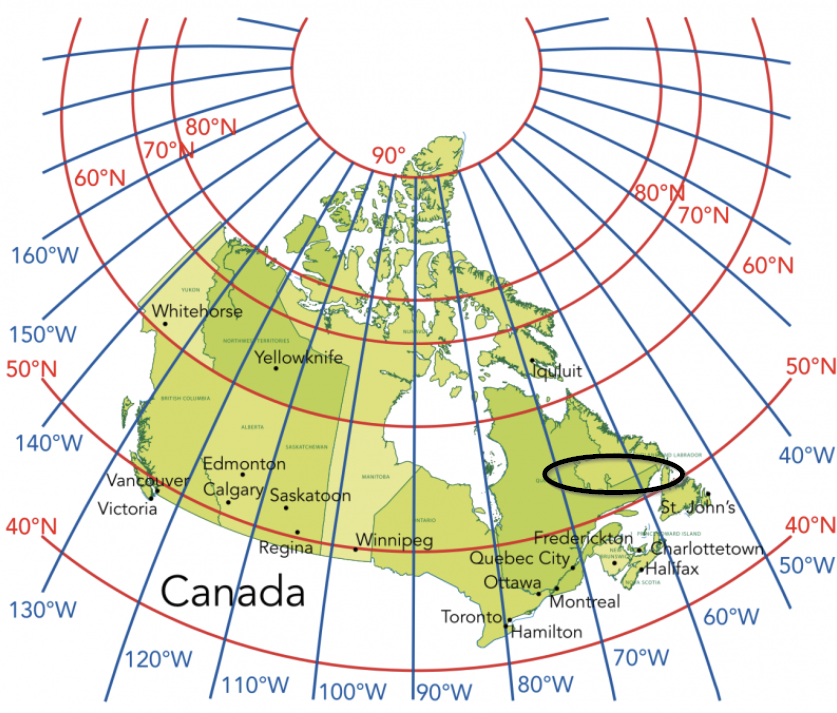
The provinces of Labrador and Quebec are encouraging tourism in their regions with a promotion called Expedition 51°. 51° refers to 51 degrees north latitude.
The black oval that I placed on this map indicates where 51° N latitude is with respect to Labrador. Last summer our goal was to get north of 60° when we were heading to Alaska. This summer the goal was 51°. It seems latitude dictates our travels these days!
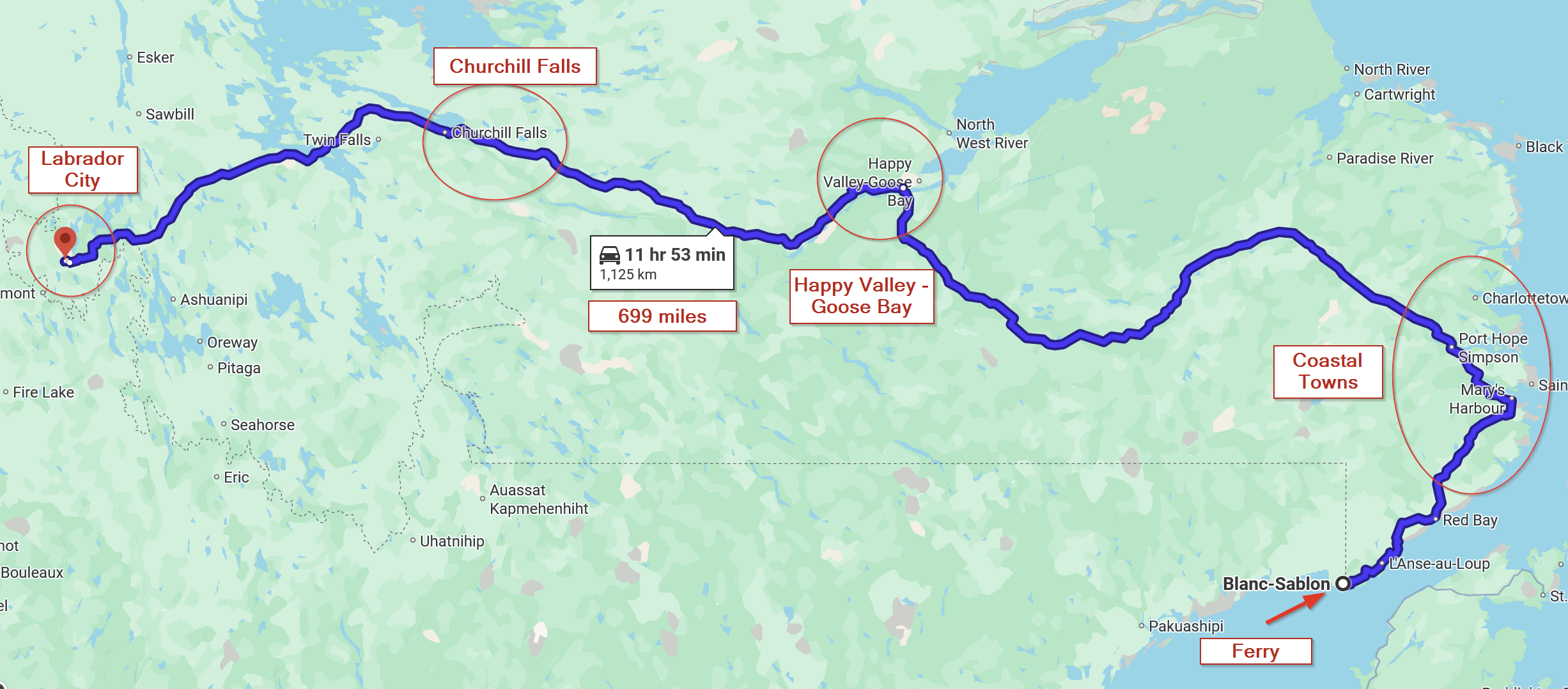
Over 1,700 km of road trip 2 provinces to discover Approximately 10 days of adventure
They were pretty close on that time estimate. It took us 12 days to do the entire route. This blog post just deals with the Labrador portion. Quebec will be the next blog post.
Once you leave the coast, you have ONLY three towns along the road and not a whole lot of campgrounds. In fact, only two. That’s all. We did a lot of boondocking on this trip! Let’s get started!
Welcome to Labrador…sort of.
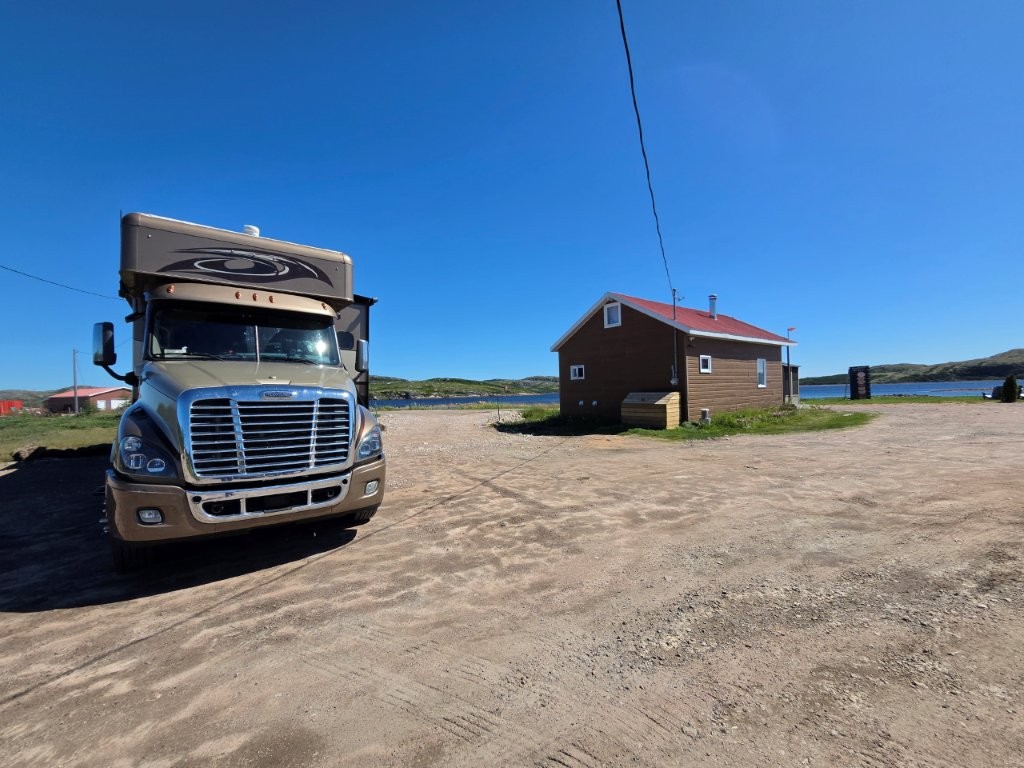
When we got off the ferry after crossing the Gulf of St. Lawrence, we were actually in Quebec. If we had driven 10 miles to the east, then we would have been in Labrador. But we decided to drive along the coast to the west into Quebec and take advantage of a Harvest Host (program where you can camp for free at a venue) that was a scallop farm!
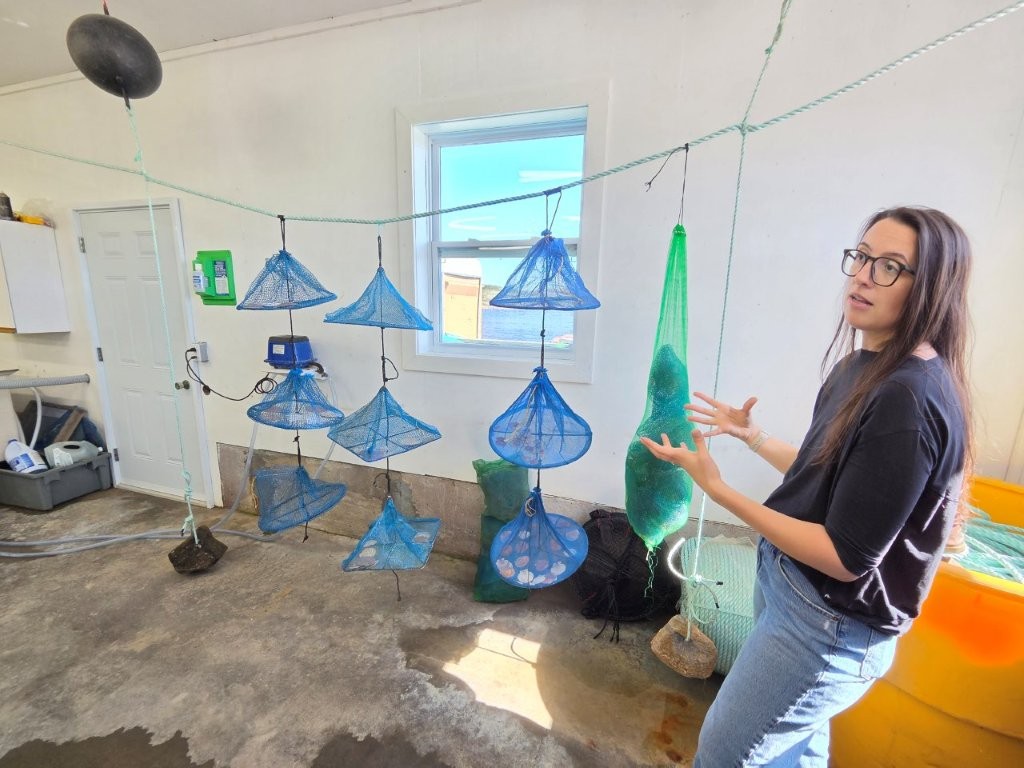
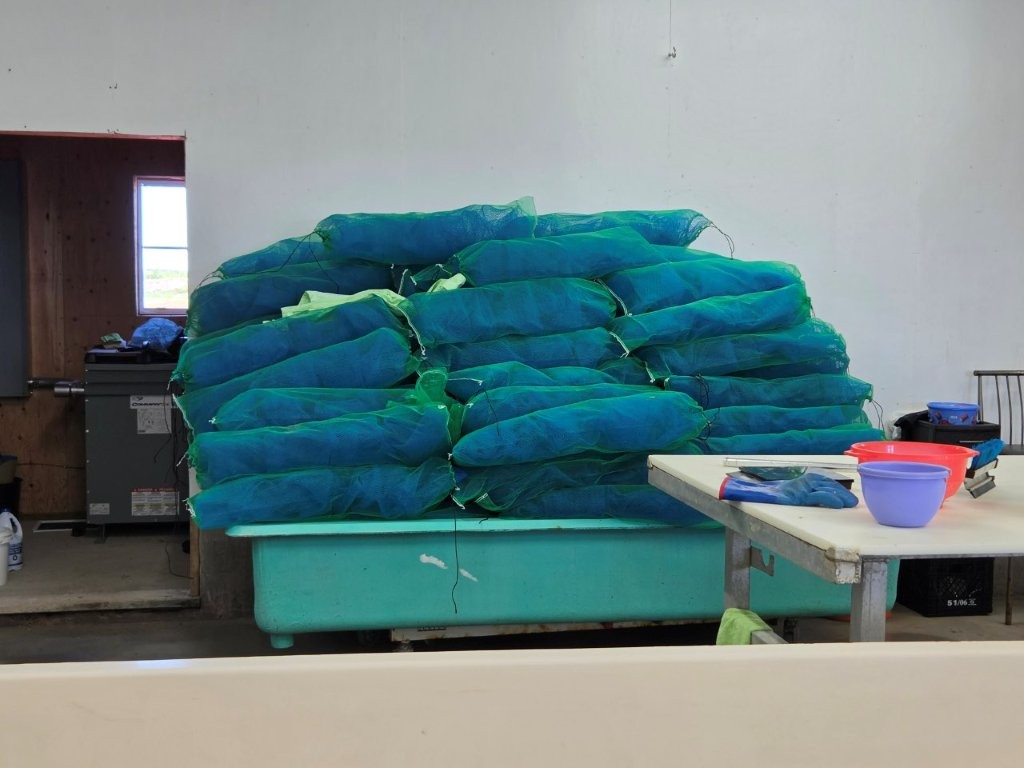
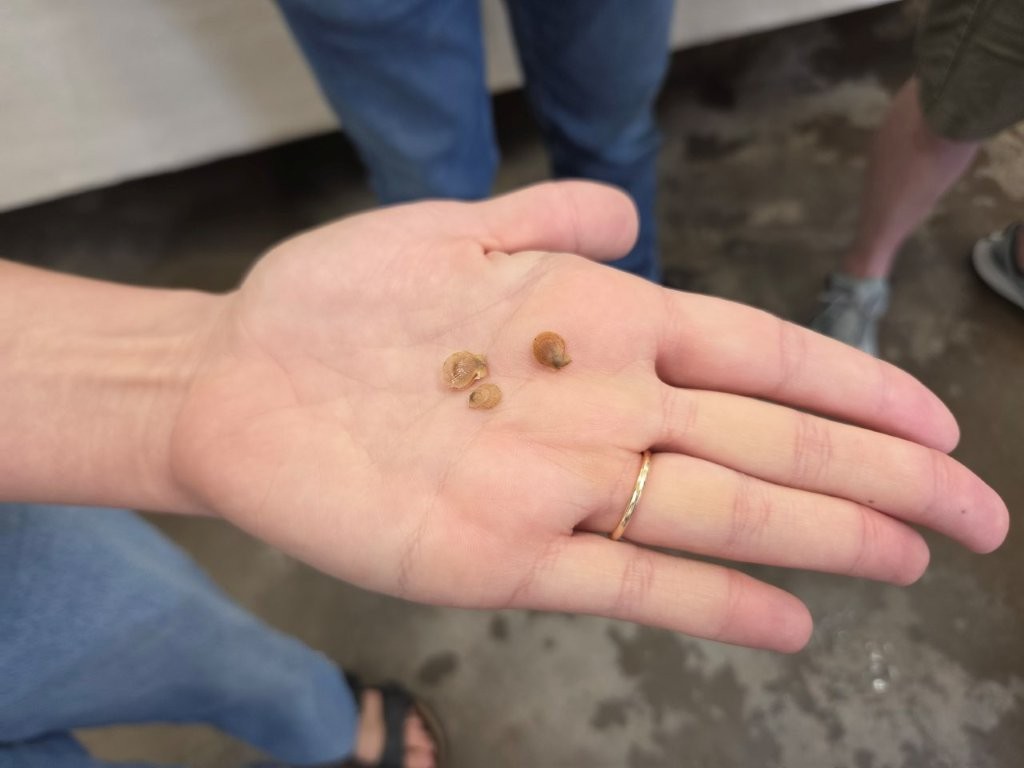
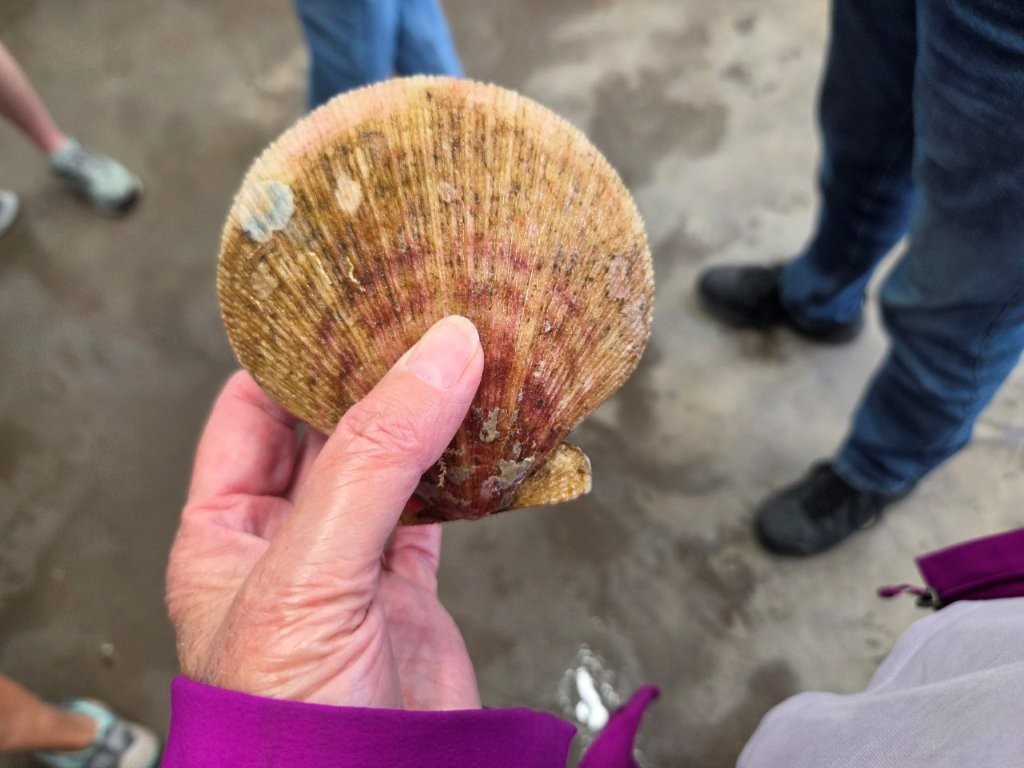
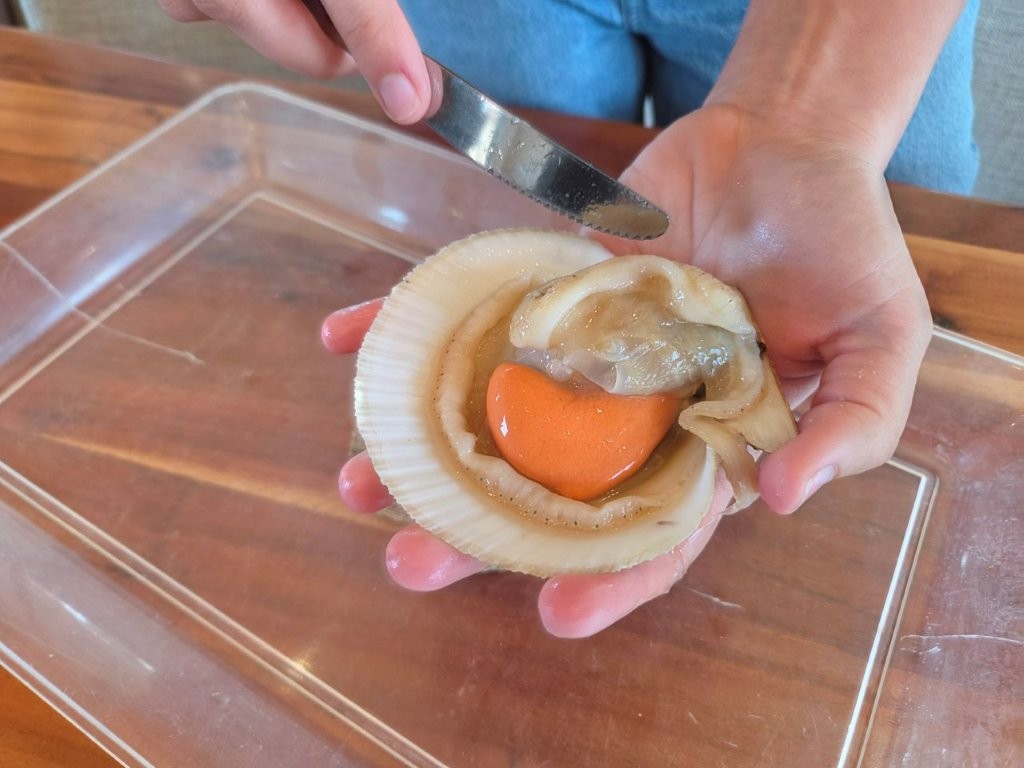
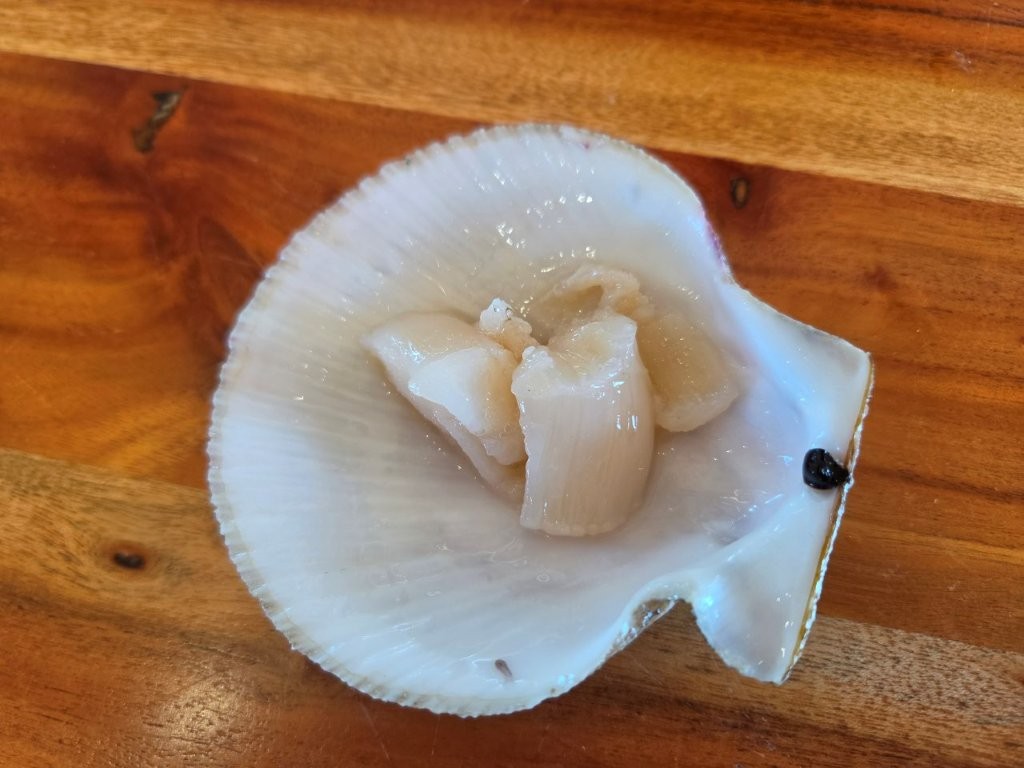
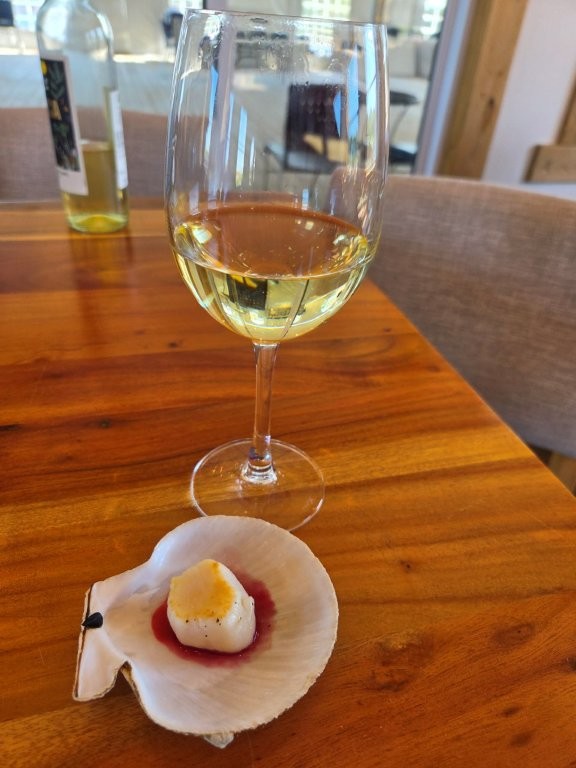
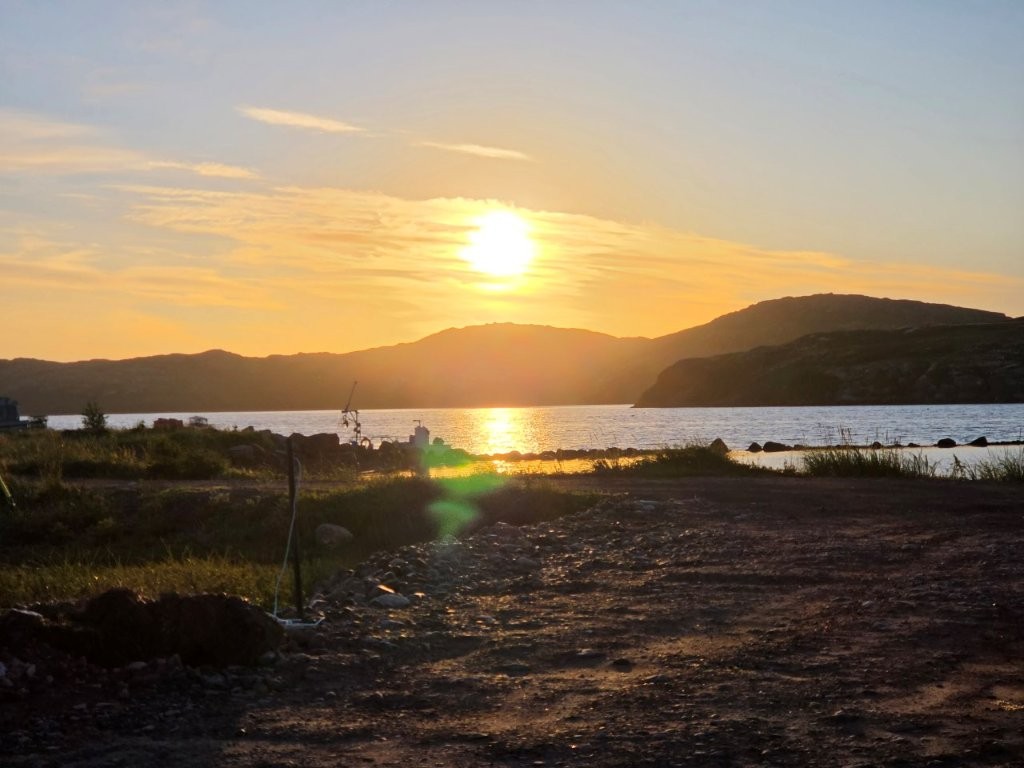
Salmon Bay Farm is on…Salmon Bay. BUT…the are growing scallops in Salmon Bay. We got the RV set up and proceeded to get a tour of the facility.One of the staff gave us our tour. Here she is showing us the various nets that they put the scallops into. The nets are suspended in the bay from 100 foot long ropes with buoys to keep the rope at the top surface. Rocks are ties onto the bottom of the vertical ropes to keep the net baskets in the water. Looking from right to left, the nets are set up for bigger and bigger scallops.These are the nets the baby scallops go into….all ready to be put into service.Baby scallops.We each go to pick a scallop out of a tank to try raw. “Ewww” was my first response. But then I decided, what the heck.Back in the restaurant associated with the farm, our guide shucked the scallop. These are the internal organs. No thank you.And this was my raw scallop. The portion of the scallop that we humans eat is the muscle that opens and closes the shell. We had a gentleman on the tour try some of the internal organs. He used to live in the area, so it was no big deal to him! I survived the raw scallop. But it was not my favorite.This is MUCH better. A cooked scallop and a glass of wine were included with our tour.We had a peaceful night at the scallop farm. The road to get here was a bit of a white knuckle drive, but overall we enjoyed the experience.
Red Bay – Whaling Community
It was time to head into Labrador. We got back on the highway and headed to the west coast. Specifically, the town of Red Bay. We had some more history lessons coming up.
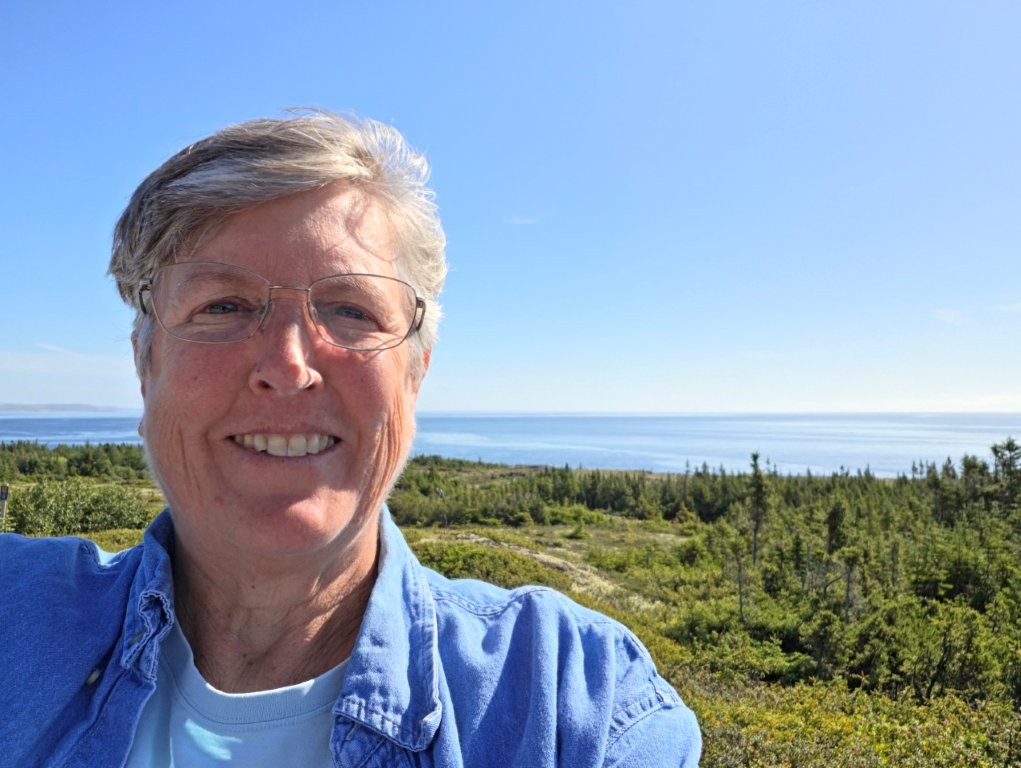
The Atlantic Ocean was beautiful. What you don’t see here is my swatting away at the black flies. They are NOT beautiful. Their little bites can drive you crazy with their itchy bites.
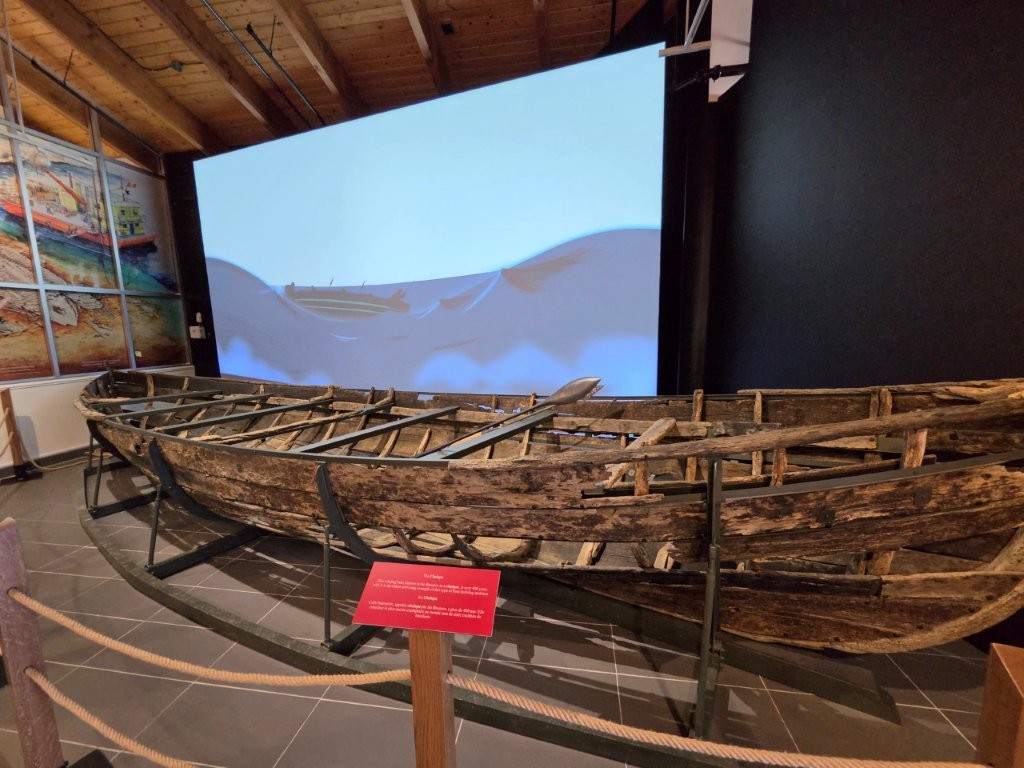
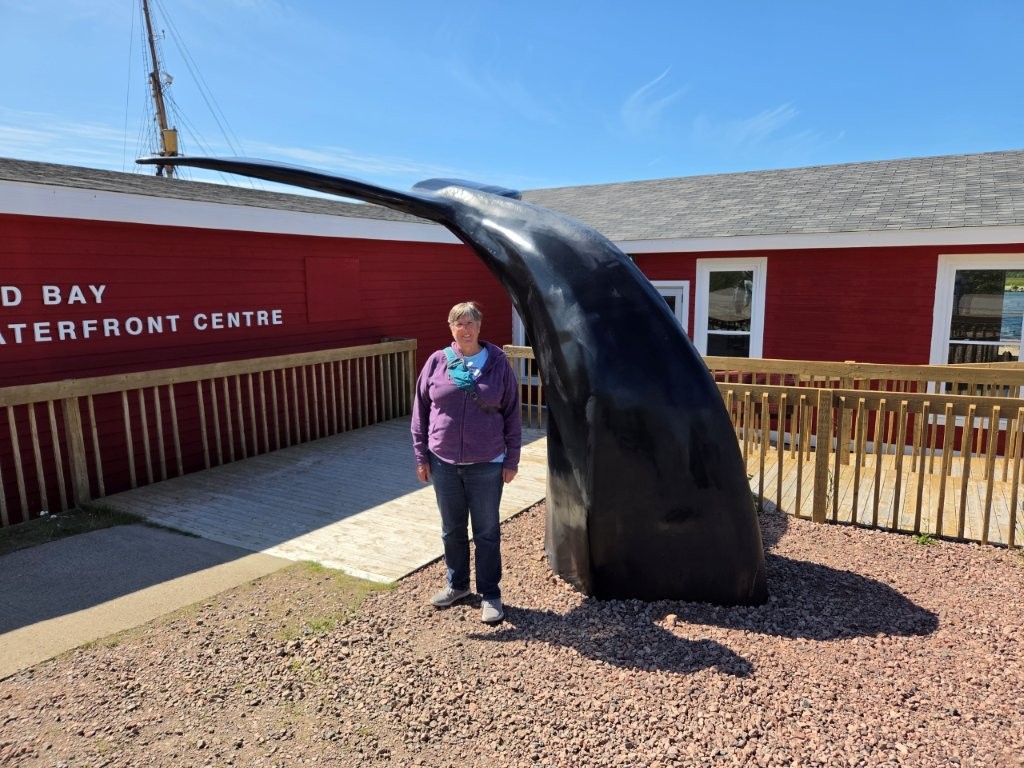
Red Bay is known for being the earliest and best-preserved example of European whaling station in North America. By looking at writings left behind in Basque (a part of Spain) followed by archeological surveys, evidence of an early 1500s whaling community was found.
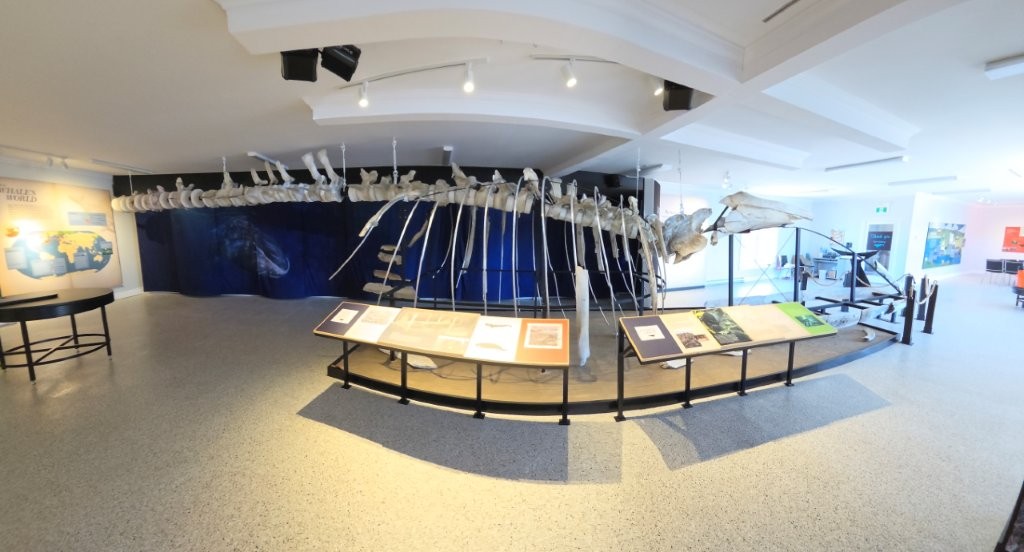
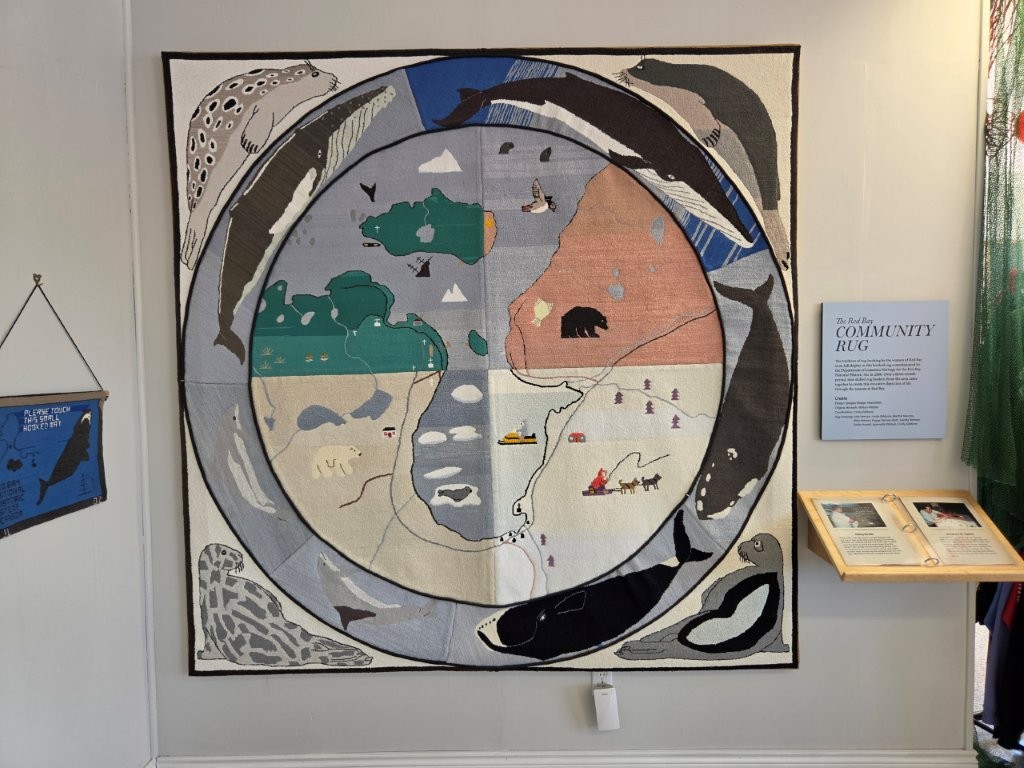
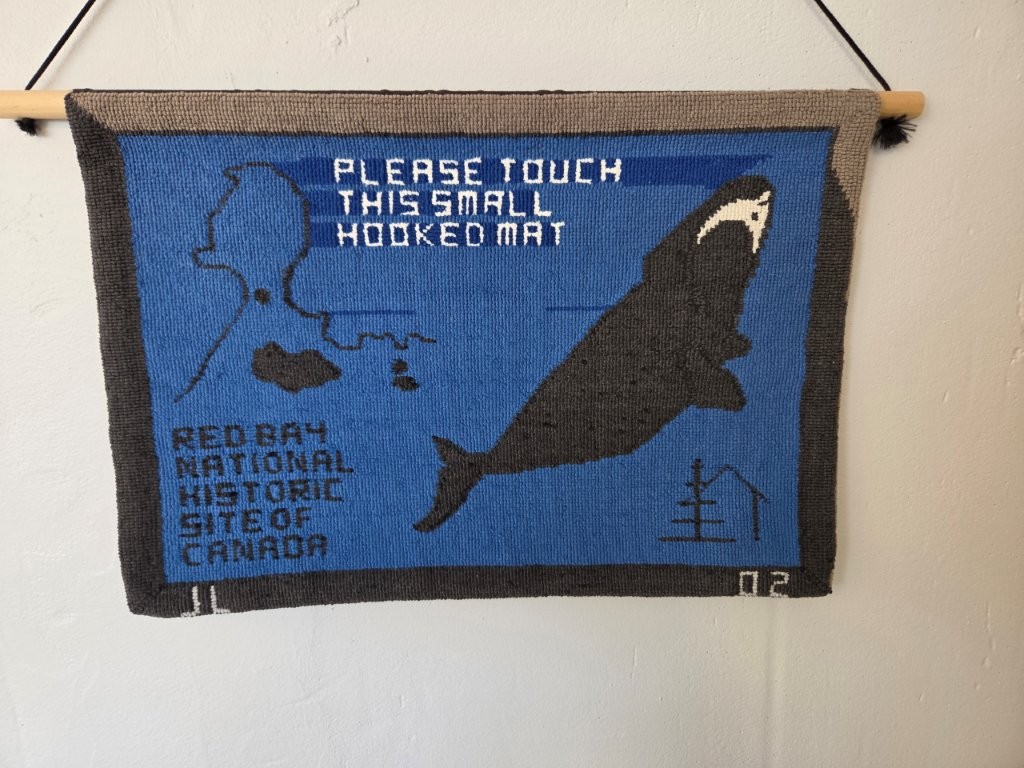
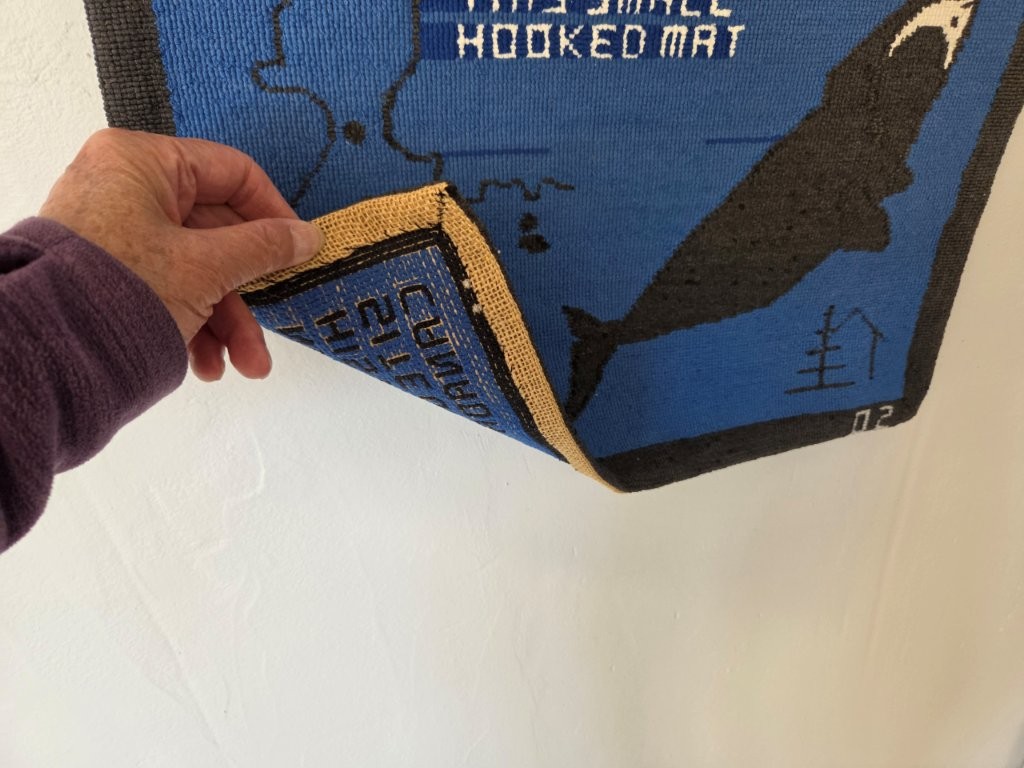
This boat, called a chalupa (yes, same word as the Spanish pastry), was brought up from the bottom of the bay. From this boat, whales were hunted.It was nice to see the history of whale hunting balanced out by an exhibit on whale conservation.We had a whale of a time. Pun intended.Rug hooking is famous in the province of Newfoundland-Labrador. Members of the community made this rug (a wall hanging actually) honoring their history. Do not touch!Fortunately, there is a small hooked rug that the public was encourage to touch!I obliged. I found it very interesting that the yarn is applied to burlap!
Trans Labrador Highway
Once we were done exploring the coast. It was time to travel west across Labrador on the Trans Labrador Highway or TLH.
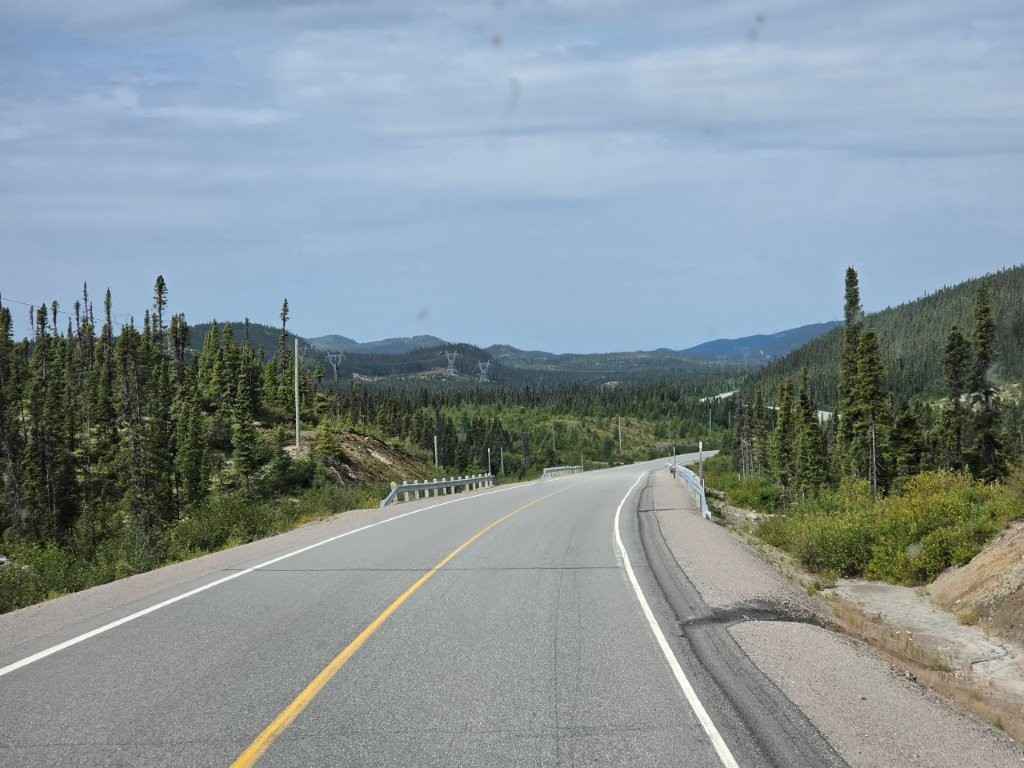
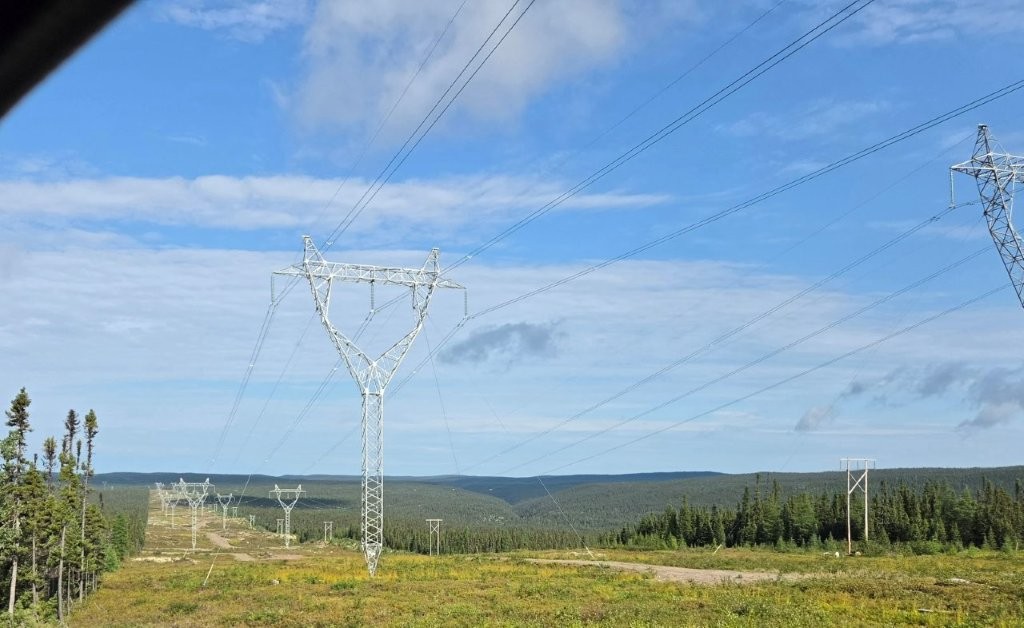
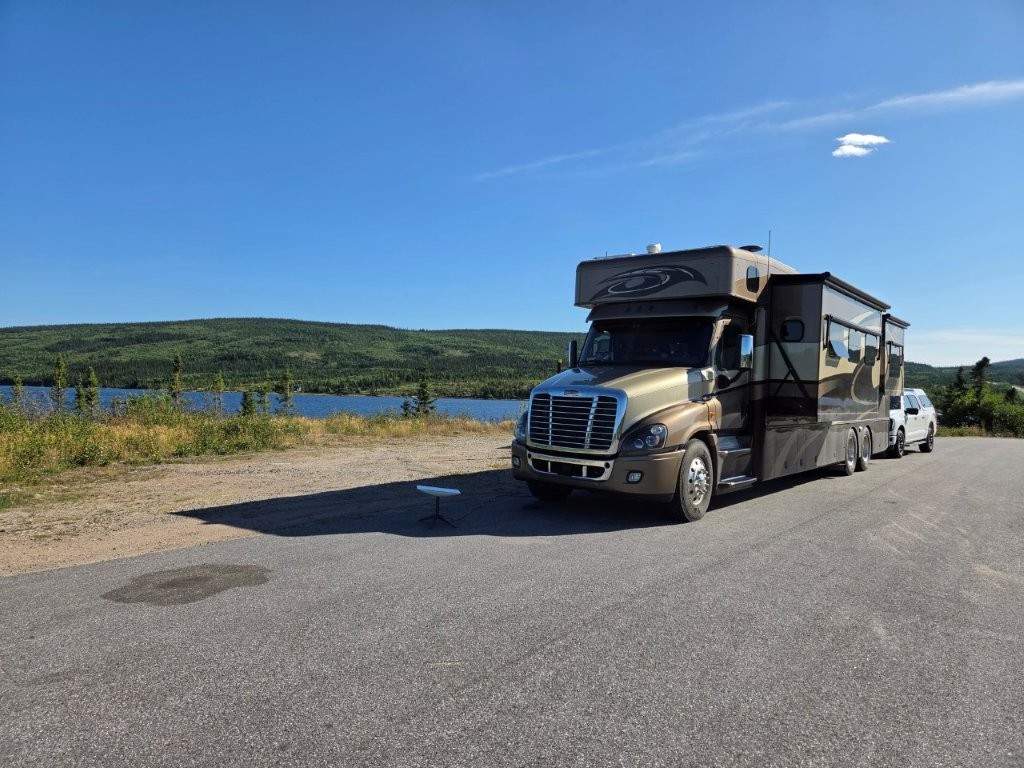
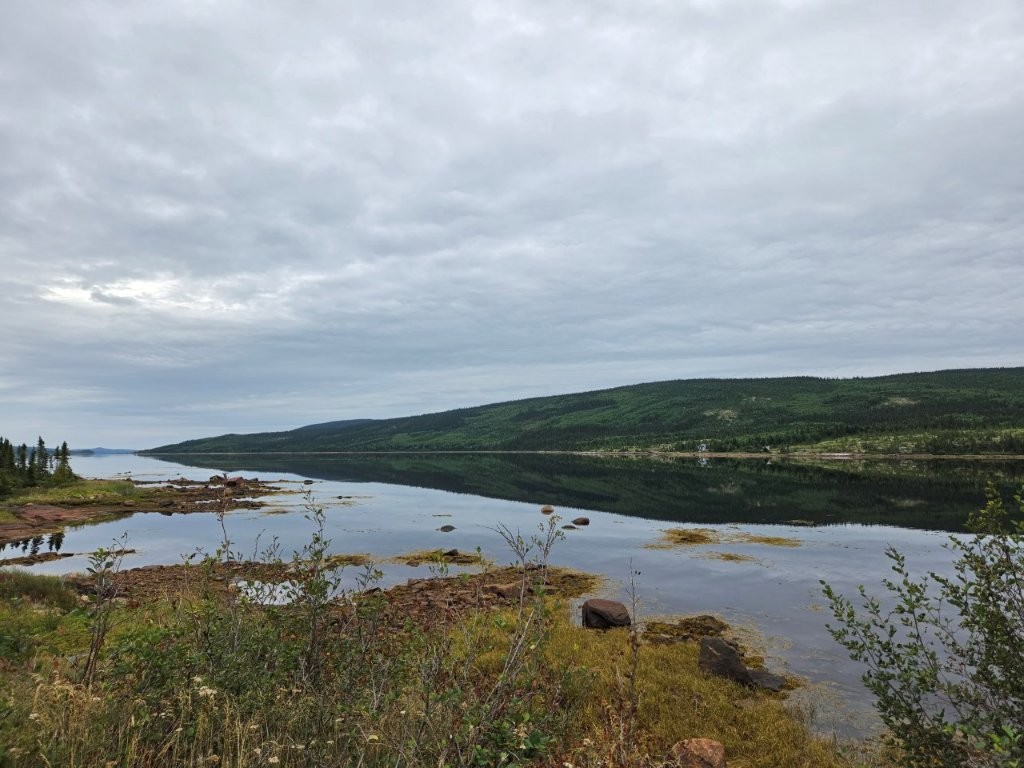
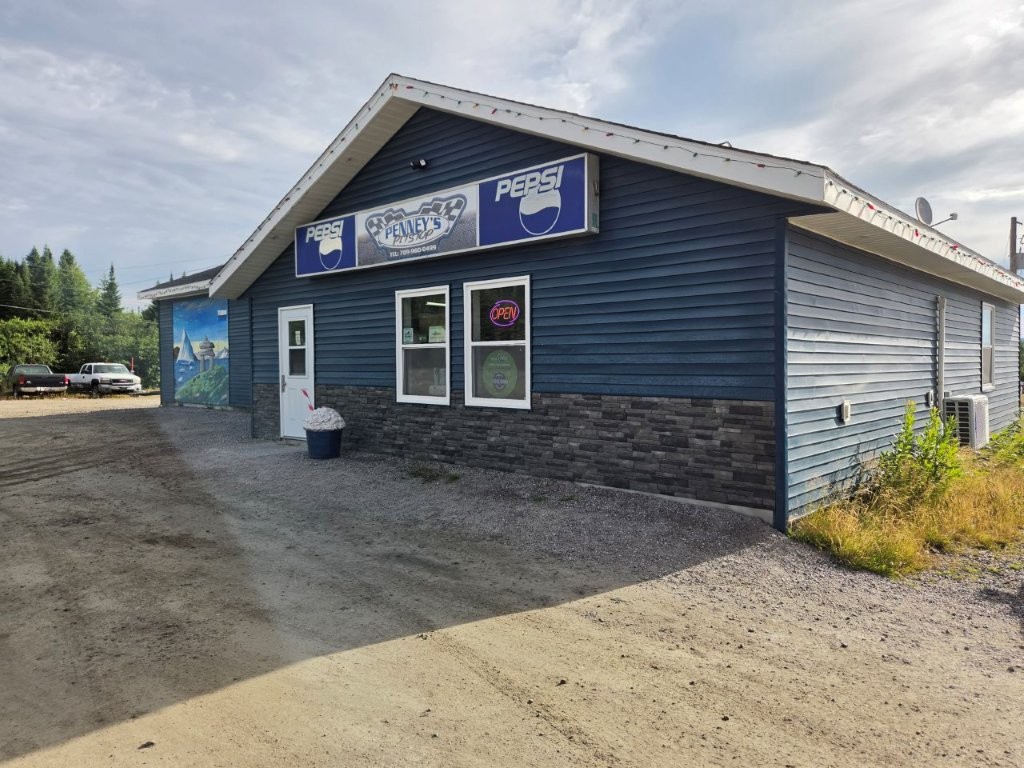
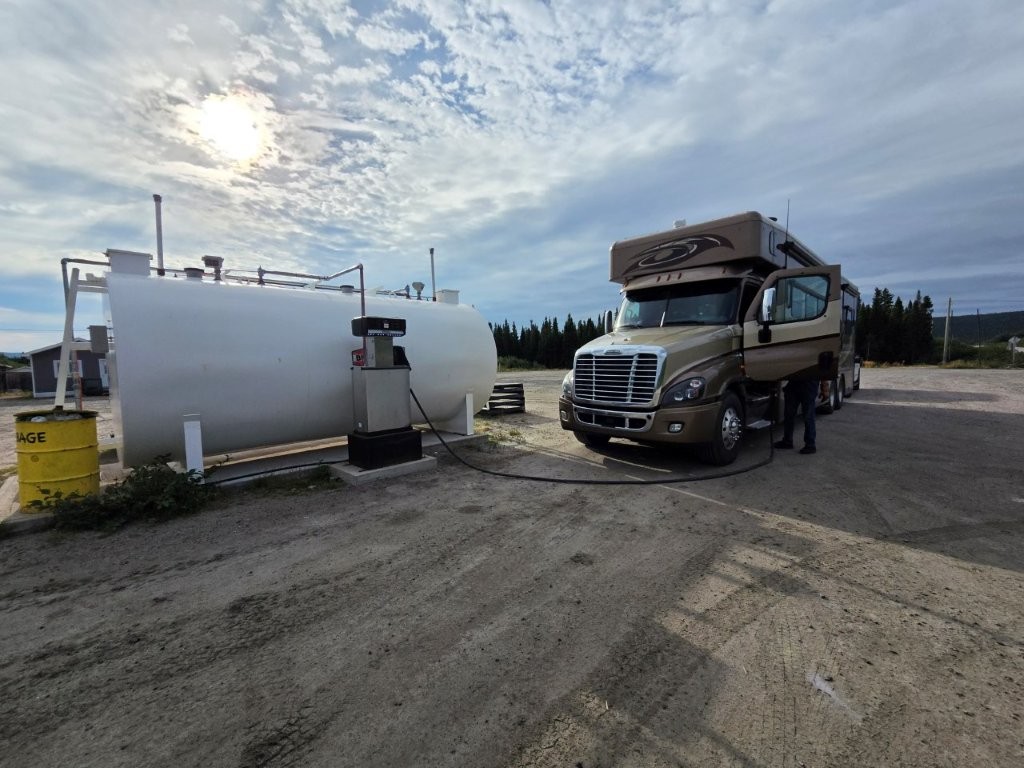
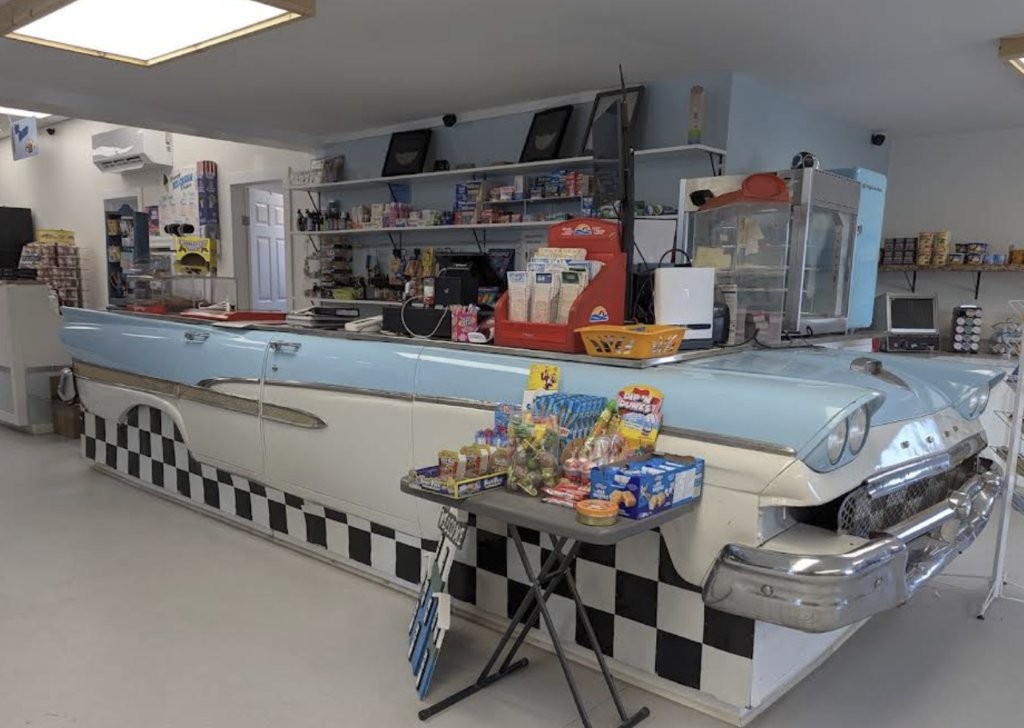
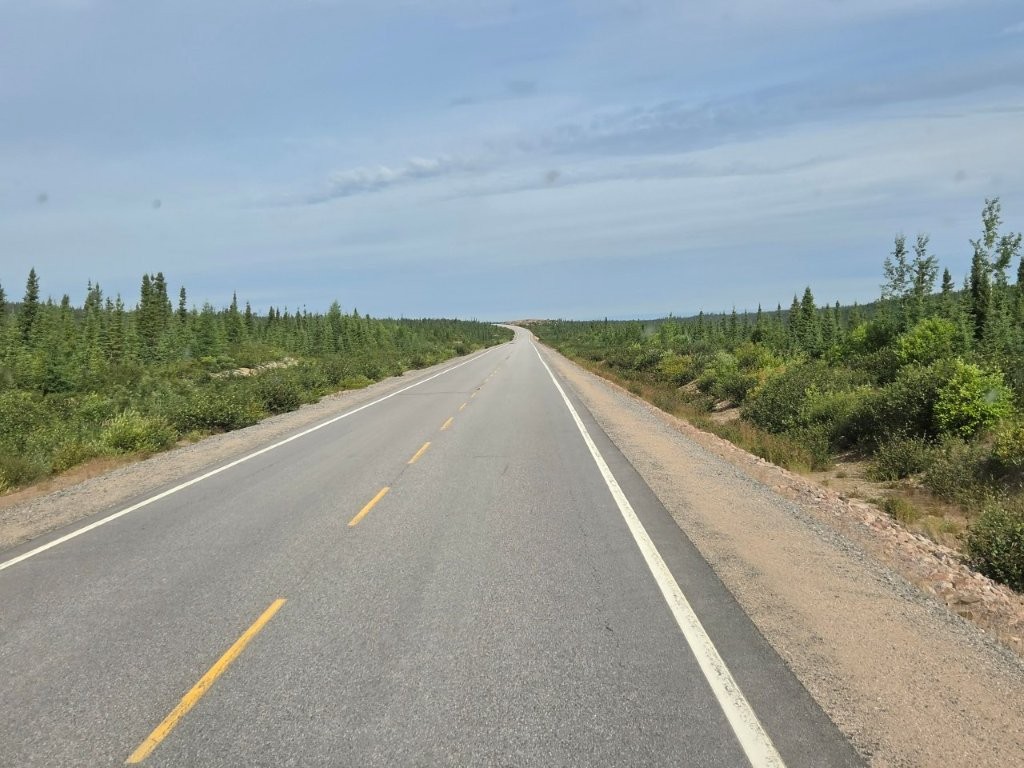
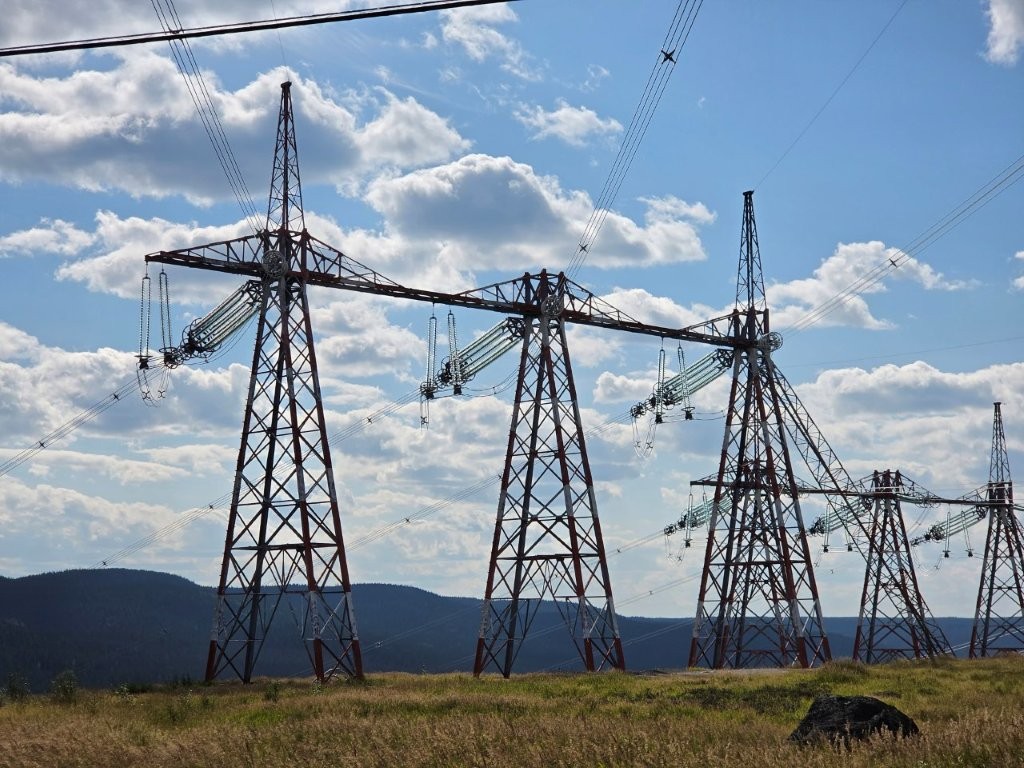
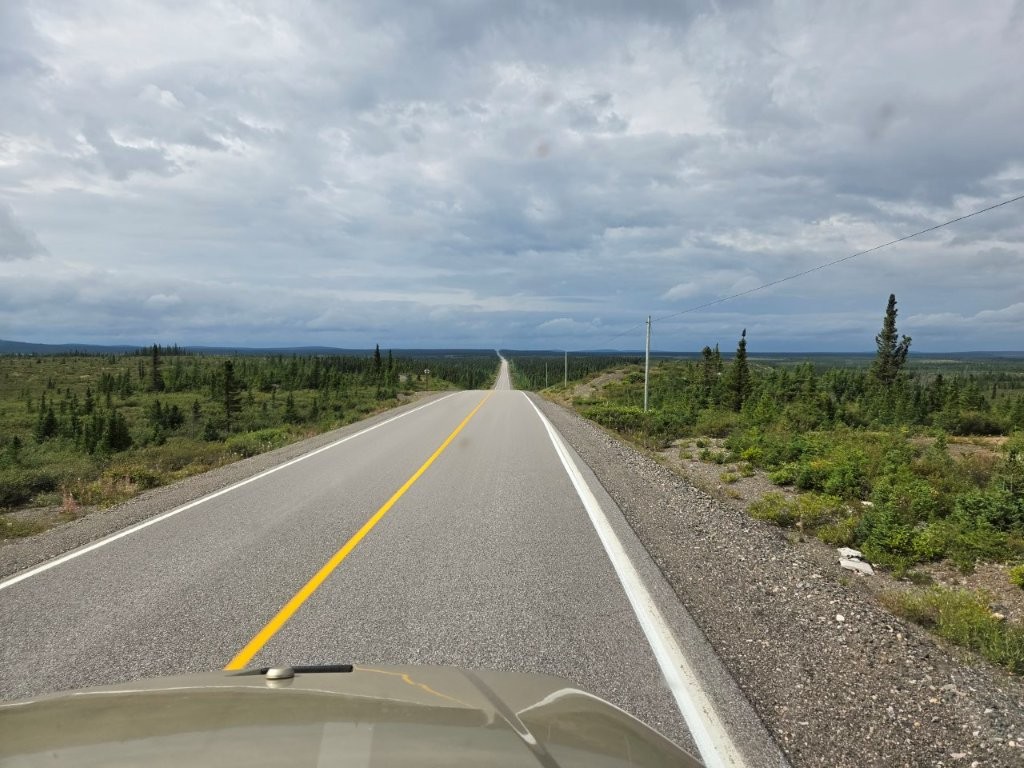
This is what much of the highway looked like. Miles and miles of road, trees, and power lines.There is A LOT of hydro-power generated in this part of Canada. A LOT!We got pretty skilled at keeping our eyes open for pull offs that we could overnight in. The first night was spent at a pull off overlooking a lake. No complaints from us!Free camping at its best!The next morning, we needed diesel fuel in the RV. Fuel stops is another thing you have to pay close attention to on the TLH. We may have a 120 gallon fuel tank, but we don’t get the world’s best fuel economy either. An establishment called Penney’s Pitstop fit the bill. The diesel tank is above ground, not something you see often. You pump and then go inside to pay.Inside, the store was pretty cute.
When we pulled into Penney’s I suddenly had a cell signal. Great! I checked my email while James pumped the fuel. Between the time we pumped fuel and I walked inside, the town’s entire cellular network went down. That meant the Internet for the town went down…and we had a $482 fuel bill to pay and our credit card was unusable. If the store’s credit card machine can’t “phone home,” you can’t use a credit card to pay for the fuel.
A gentleman who had just pumped gas for his truck was staying nearby, so they just took his name and the amount he owed. He would settle up later. I was afraid they would make us pay off our bill by having us clean bathrooms or something if the Internet didn’t come back quickly (just kidding…they were really nice about the whole situation). James and I pulled out our wallets and pulled together $482 in Canadian money. Phew, crisis averted.
We had been warned last summer to carry Canadian cash when going across the Yukon up to Alaska. Internet is NOT a sure thing. We did fine last summer and this summer we are glad we heeded that advice. Credit cards don’t always work in the wild.
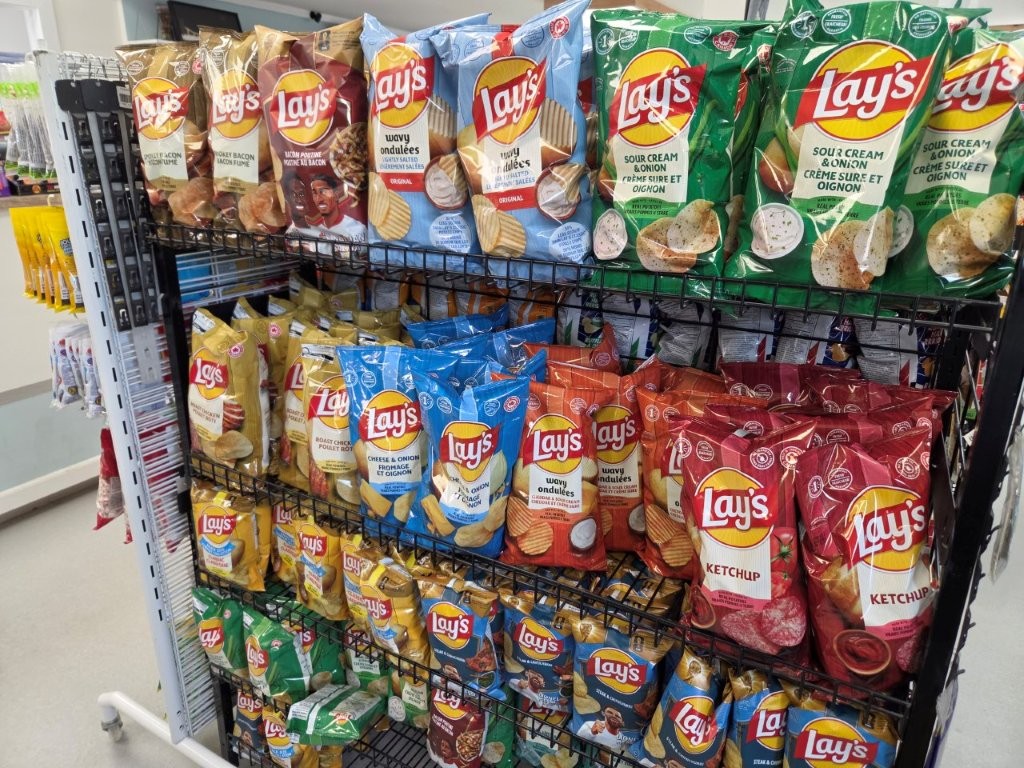
I took this picture of a potato chip display in Penney’s Pitstop. The Canadians really have some strange potato chip flavors. Ketchup!?! We did buy a bag and try them. They aren’t terrific, but they aren’t horrible.Having paid our fuel bill, we were back on the road.
The Trans Labrador Highway only has cell service along the coast and in the three towns along the highway. That leaves hundred and hundreds of miles with no way to get help if you should need it. The province will provide travelers with loaner satellite phones if you wish one. You pick one up at the start of your journey and return it at the end. If you need help, the phone would dial the Royal Canadian Mounted Police. I considered getting a loaner phone. But, having our Starlink that I could pull out if needed, I decided not to bother. If we didn’t have our Starlink with us, I probably would have taken advantage of the program.
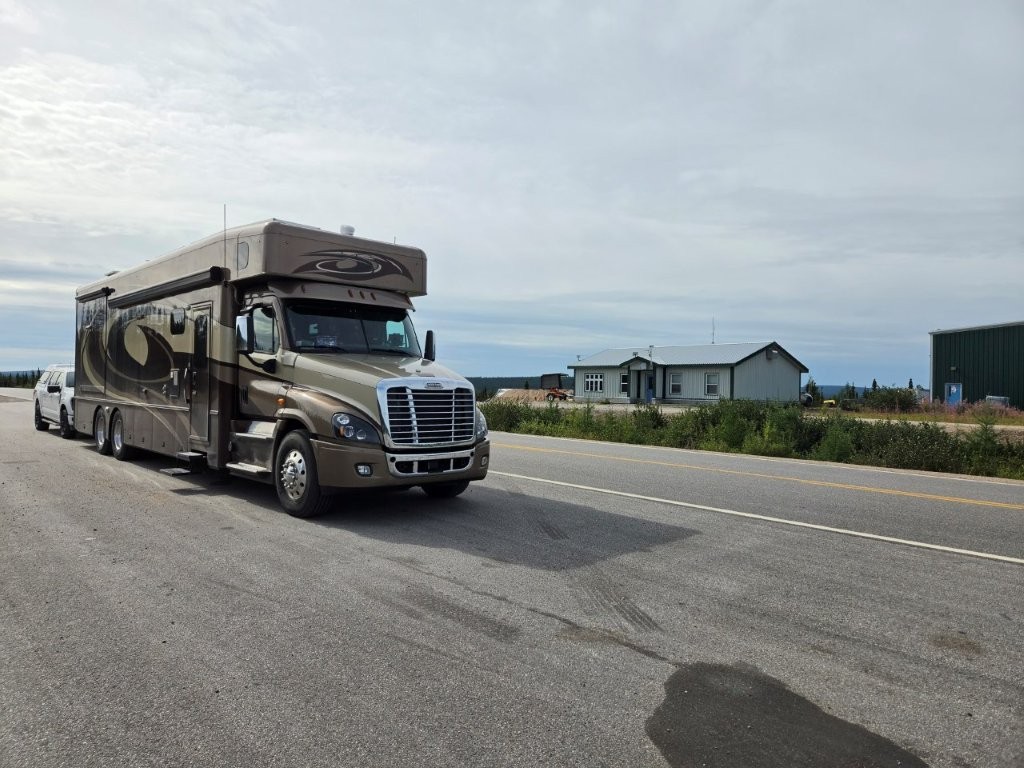
Another feature of the TLH are rest areas at Highway Maintenance Garages that have free WiFi! The Maintenance Building has a Starlink antenna on its roof and an open WiFi signal. Again, this was another opportunity to get help if you needed it. You really don’t realize how much you are dependent on having Internet until you don’t have it. We use Google Maps while driving. I had to make sure to down the day’s maps for offline use and have the day’s route in my tablet or phone BEFORE we turned the Starlink off. Yes, they have Starlink antennas that you can use while traveling, but we already own this generation 2 antenna…so that’s what we use.
Happy Valley – Goose Bay
The town of Happy Valley – Goose Bay is home to a large airport (something like Gander). Again, the airport is why the town came to be. They town wasn’t much, but it gave us a chance to get groceries, etc.
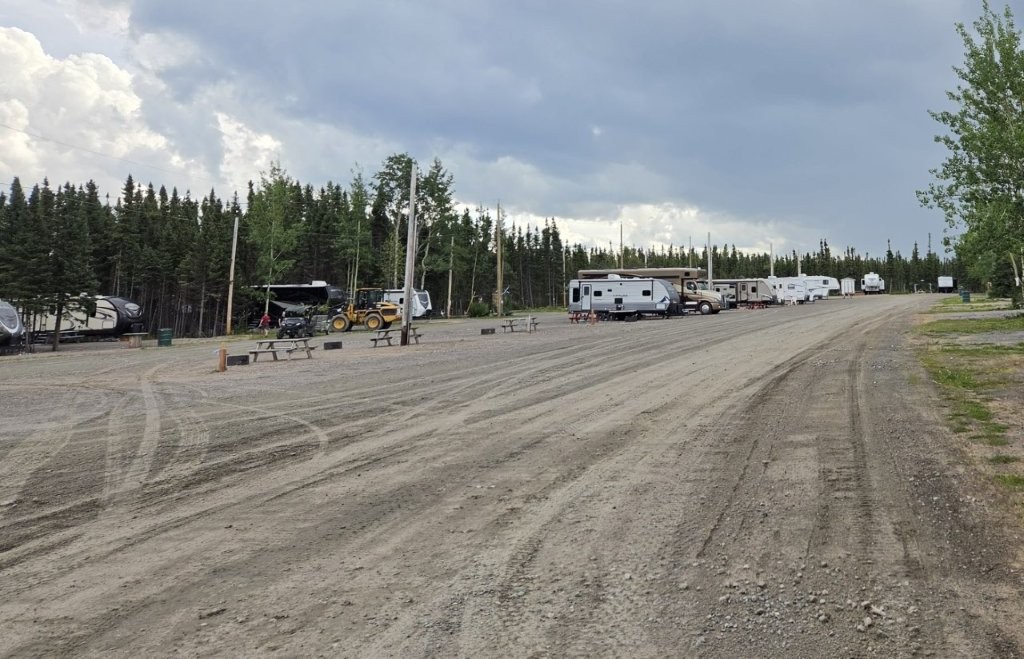
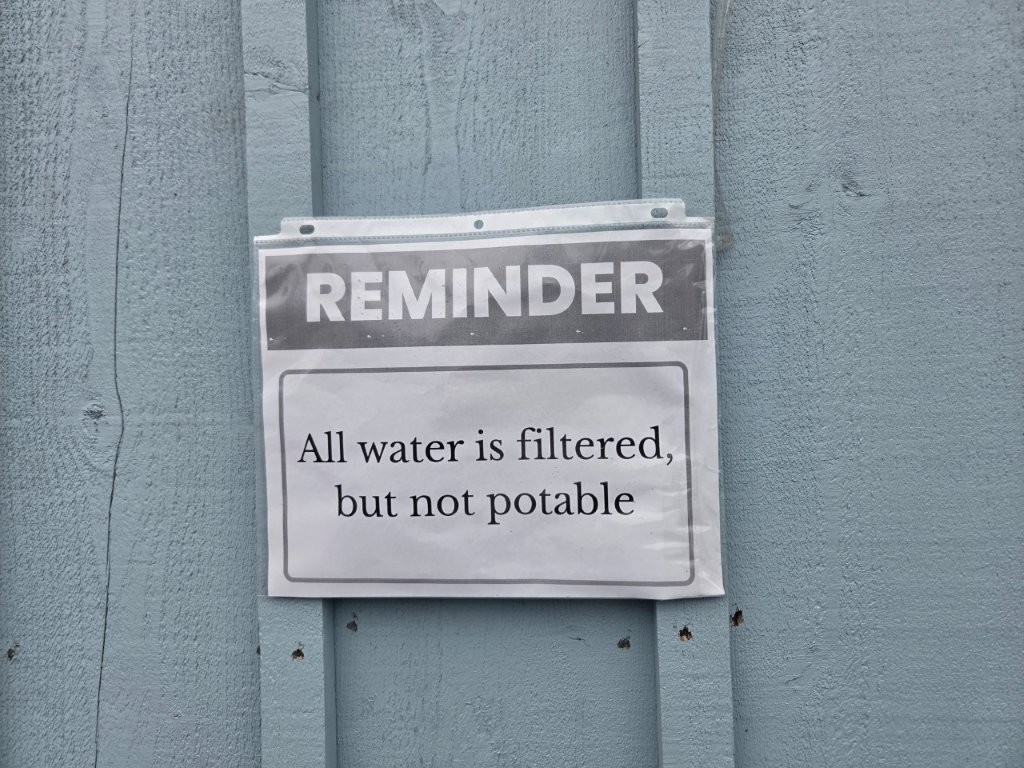
The campground was not that impressive, but we were able to plug in and get the RV’s lithium batteries back up to 100%. Our solar charging works great when there is sun. It can struggle when the weather is cloudy and rainy.This type of sign is seen all over Newfoundland-Labrador. Don’t drink the water! Some campgrounds are fine, some aren’t. So something else you had to be mindful of is where to get potable drinking water. We don’t drink the water out of our RV’s water tanks. Instead, we carry six 1 gallon jugs and fill them all when the opportunity presents itself.
Churchill Falls
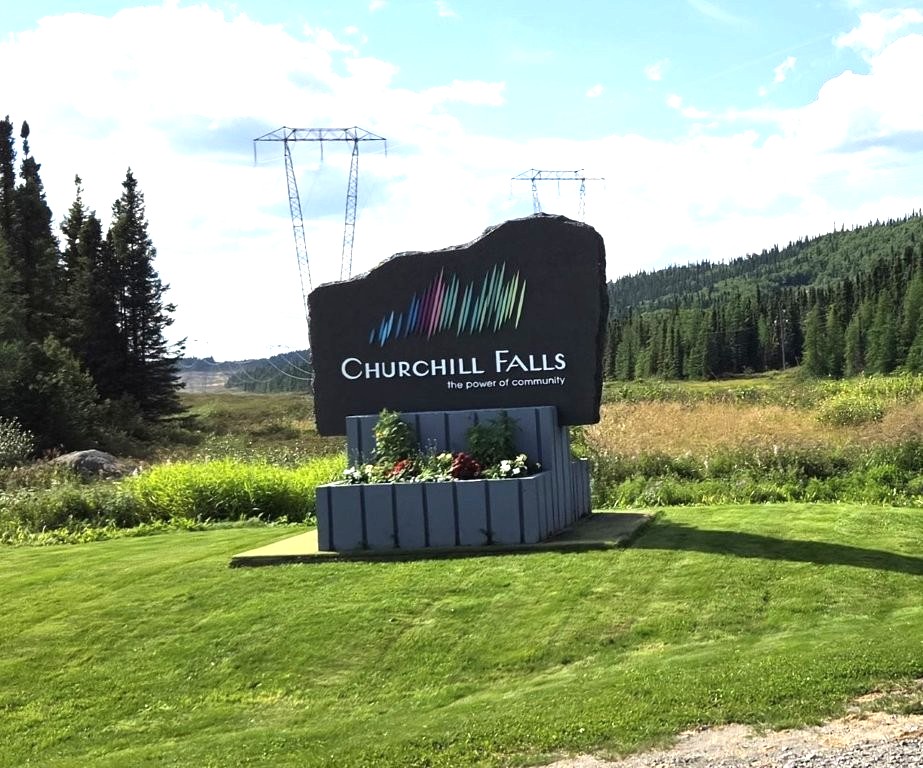
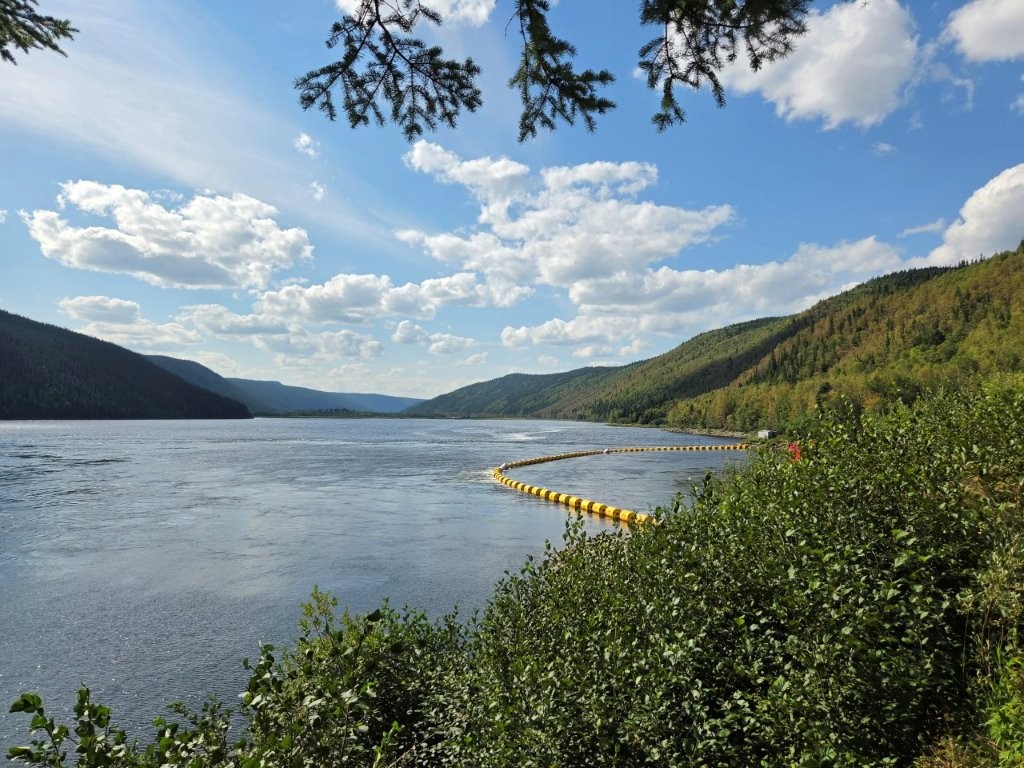
You know the term “Company Town?” Our next stop was Churchill Falls and it is DEFINITELY a company town. The Churchill River takes a drop here (hence the Churchill Falls aka waterfall) which the power company took advantage of and built a hydroelectric plant here.
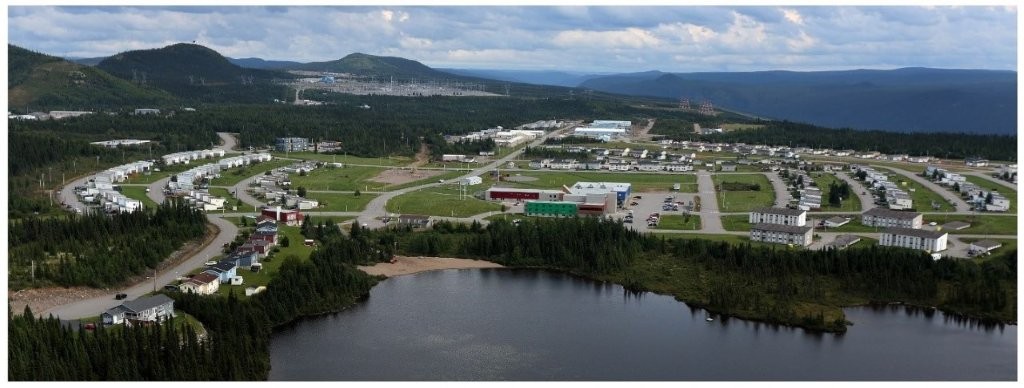
Below is the town. All of it. And it’s all owned by Newfoundland-Labrador Hydro. All of it. The houses, the community center, the roads. All of it.
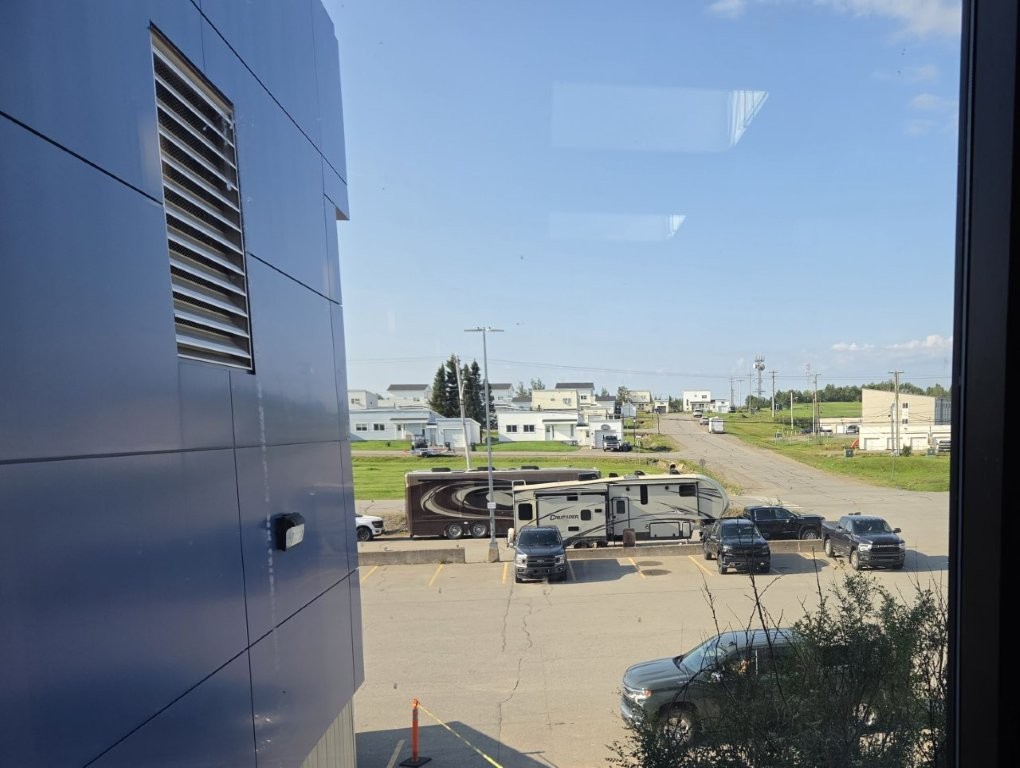
In the center of the picture is the Town Center, you can see one of the wings of the building is green, another red, another blue. Make note of the parking lot to the right of the Town Center.We boondocked for two nights in that parking lot. It was sunny both days, so we had no trouble keeping our batteries fully charged up.
We decided to stay a couple of nights to take a tour of the power plant. Of course we had to check out the Town Center.
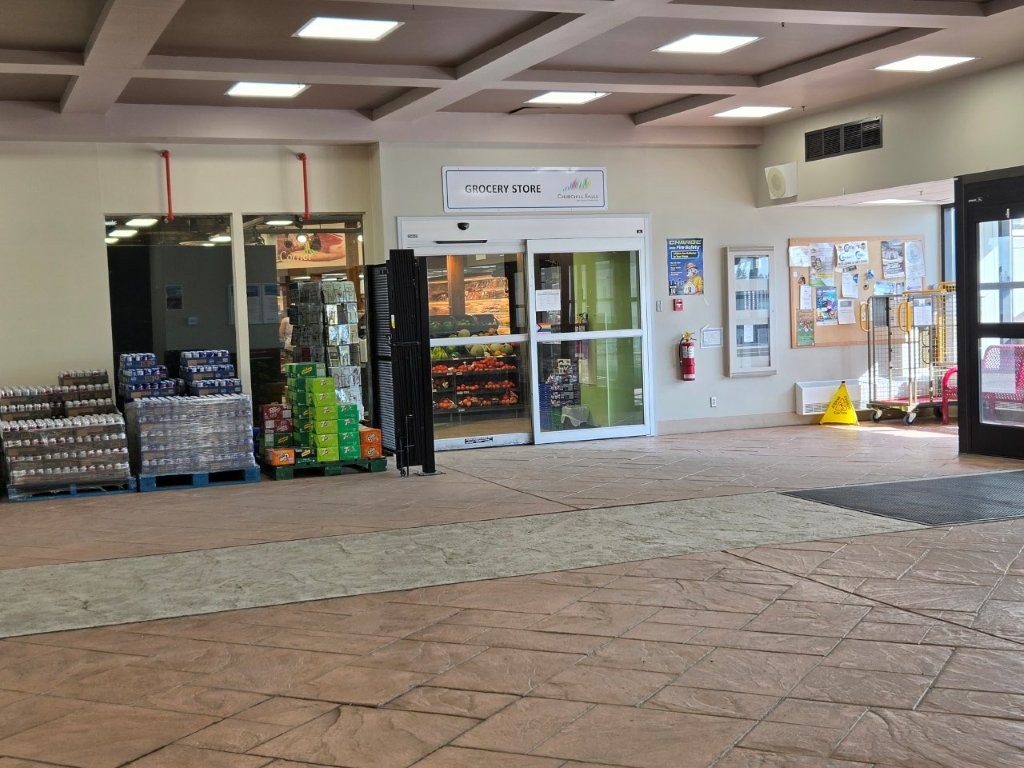
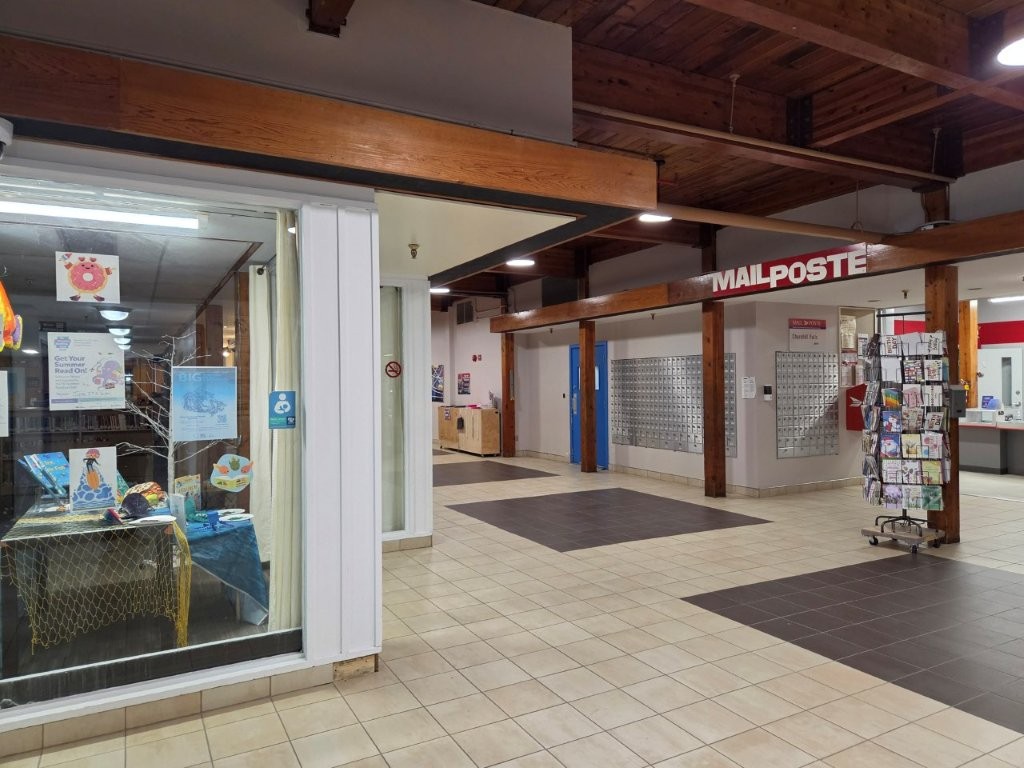
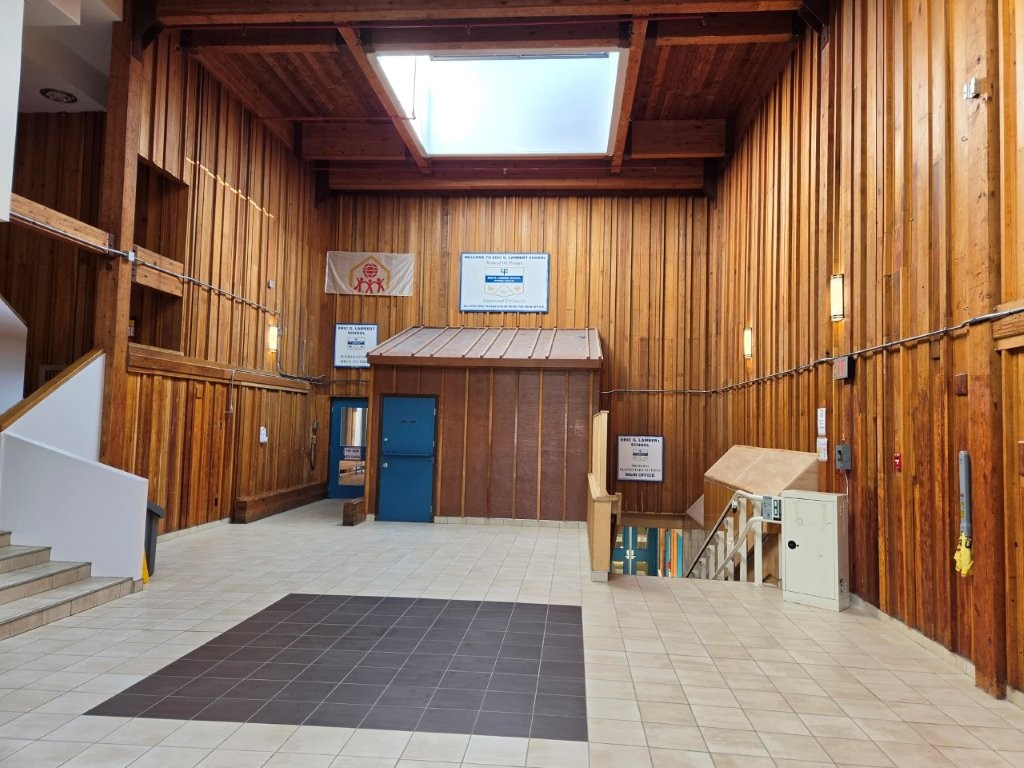
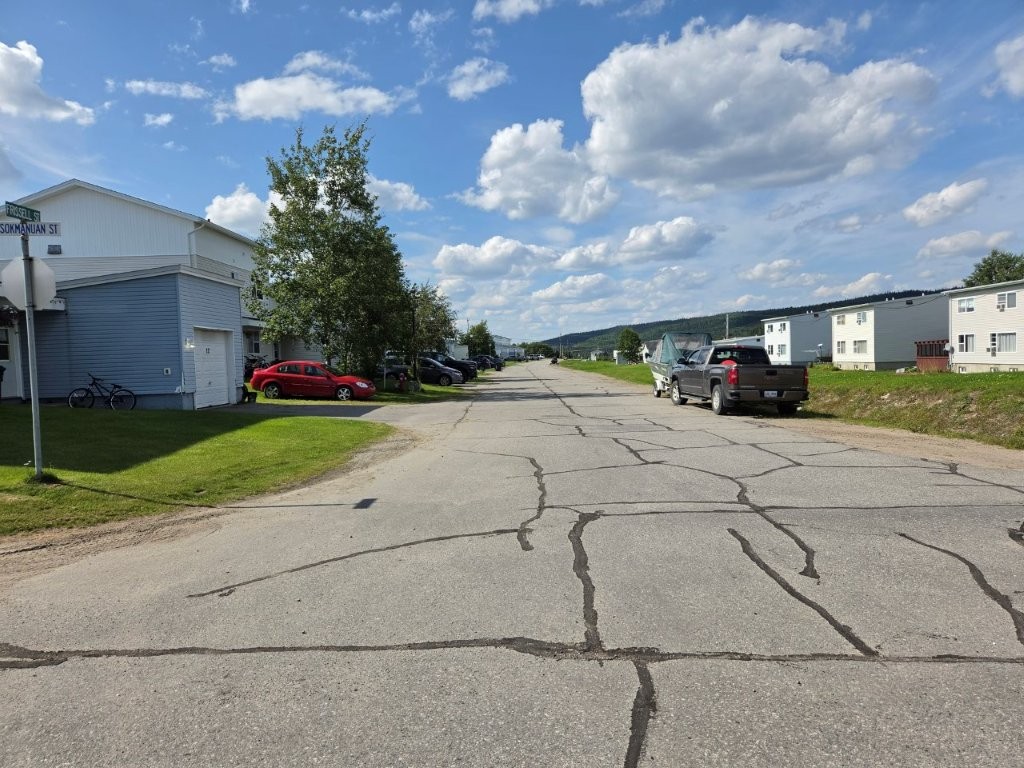
Walk in and you immediately see the grocery store. It was very well stocked. If you want people to work here and bring their families, you have to keep them happy.One floor up was the library (left) and the post office (right).In the same building is the school! Here’s the entrance. Grades K through 12 are all in the same school in the Town Center.Workers can rent company housing at a reasonable price. We were told by a local that houses are only on one side of the street (left in this case) so that the snowplows have somewhere to push the snow in the winter (right side of the street here). Also, all houses have FREE power!
We signed up for our power plant tour on the last day of the tour season. We were discovering that the tourist season in this part of Canada shuts down the weekend BEFORE the Labor Day Weekend!!!
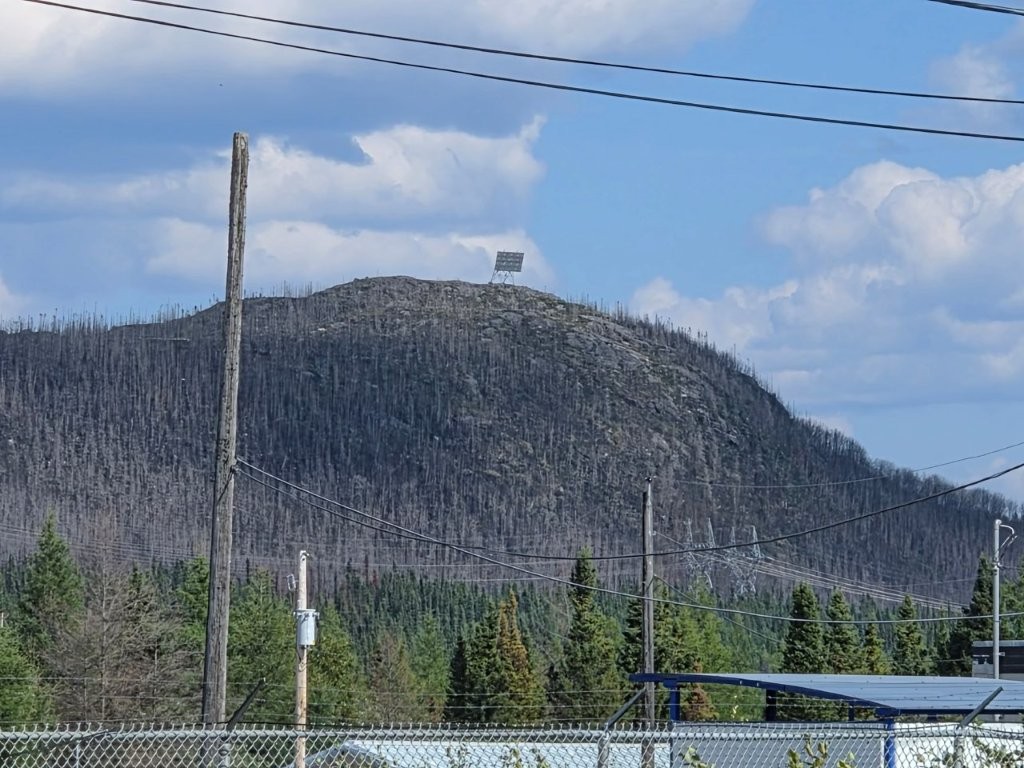
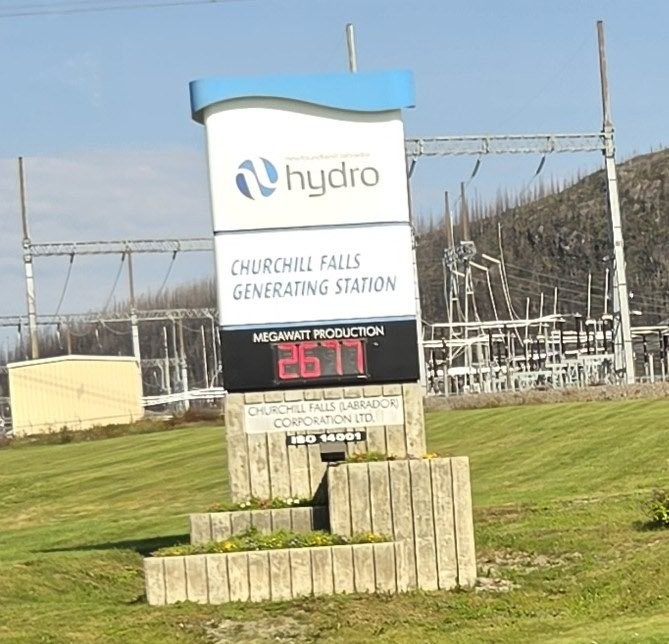
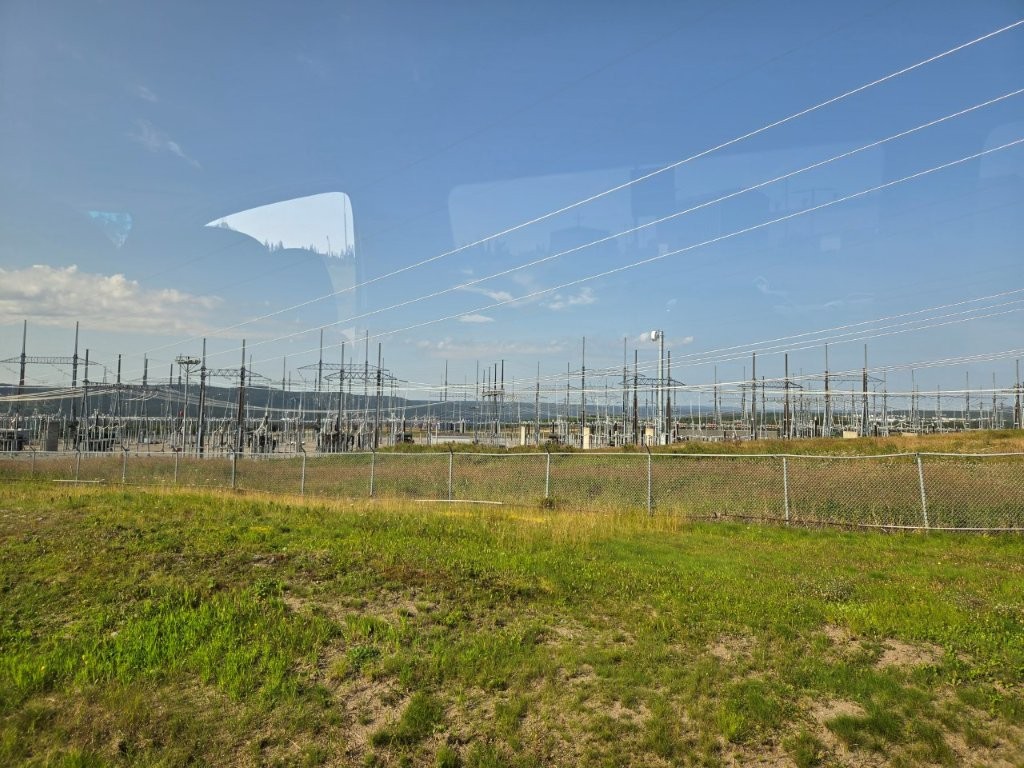
We asked what this structure was on top of a high hill. It was a communications tower utilized by the hydro workers.This sign showed how many Megawatts of power are currently being produced. Demand is higher in the winter for heating. They don’t have air conditioning demands in the summer here.The switch yard.Huge towers taking all the power down to Quebec.This is where the water comes out of the generating station back into the Churchill River.
We enjoyed our visit to Churchill Falls, but the power plant tour was disappointing. The story was we could not go into the plant itself because the elevator had been broken all summer. We suspect that is just a way to not have to let the public in. Whatever.
Labrador City
Our final stop at the far west end of the Trans Labrador Highway was Labrador City (Lab City for short).
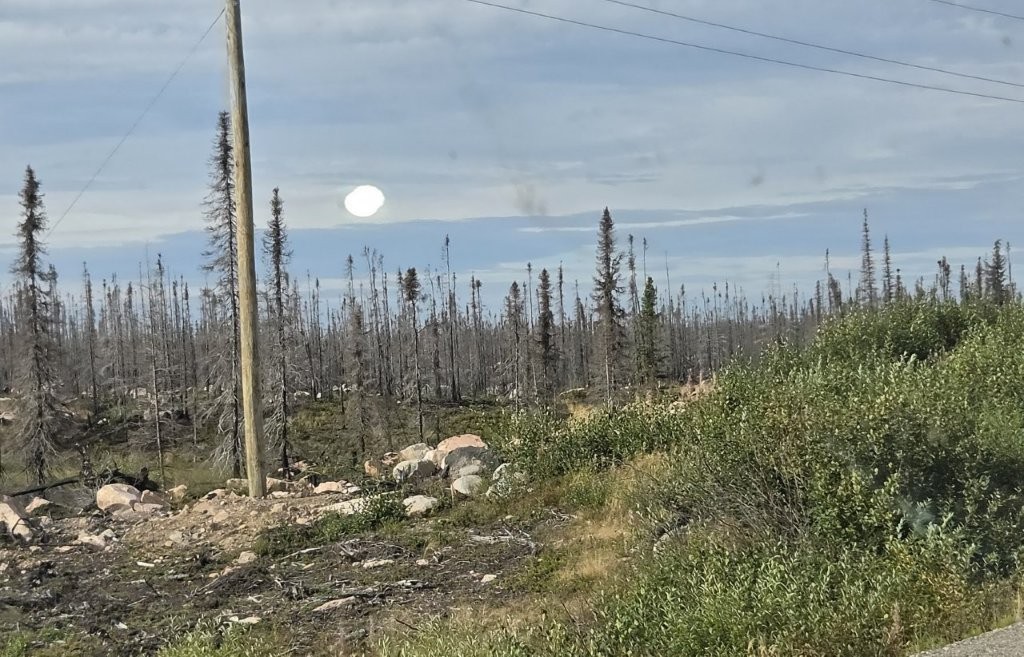
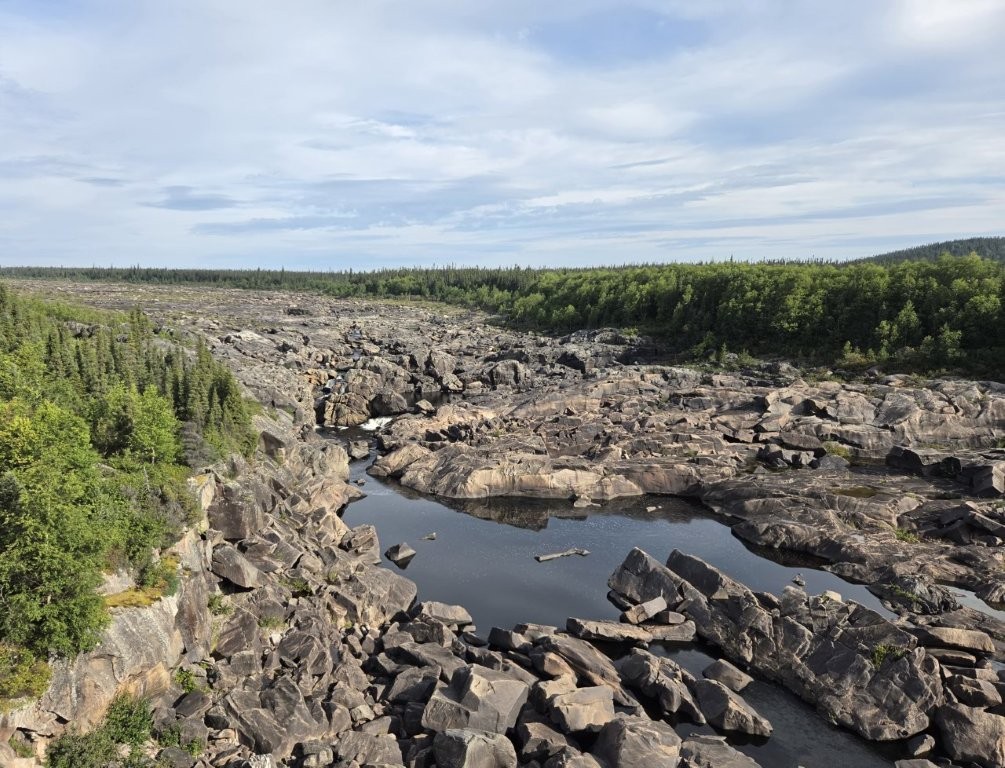
Again, miles and miles of road and trees. It was pretty easy driving! Although I’m not sure I would want to be on this road in the middle of winter.The terrain got rockier along this stretch of highway.A waterfall, minus the water!
Lab City is another town built around a particular industry. In this case, it was ire ore mining. We had hoped to do a mine tour, but again, the tours had shut down the week before. Bummer.
Just south of Lab City is the border with Quebec and the town of Fermont. The town is notable for “The Wall.”
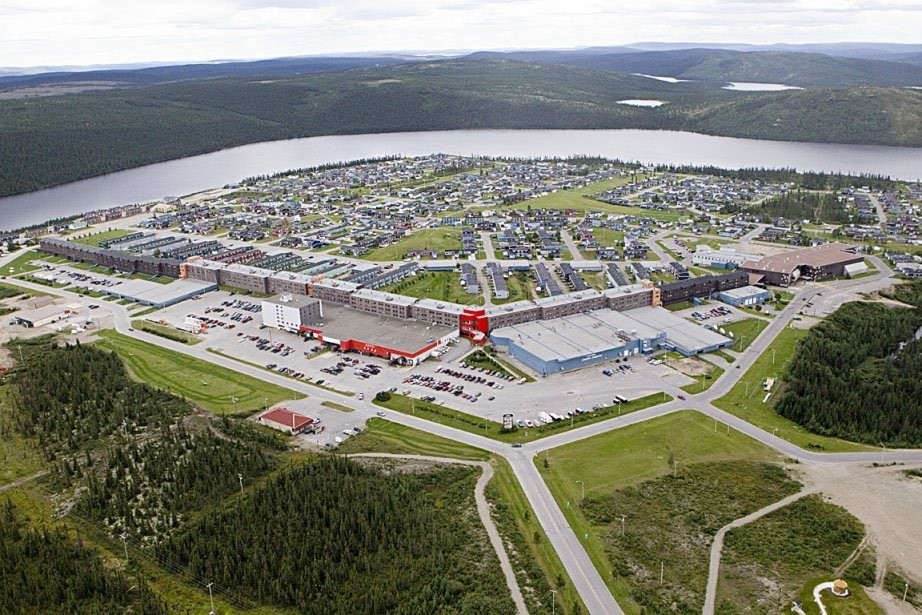
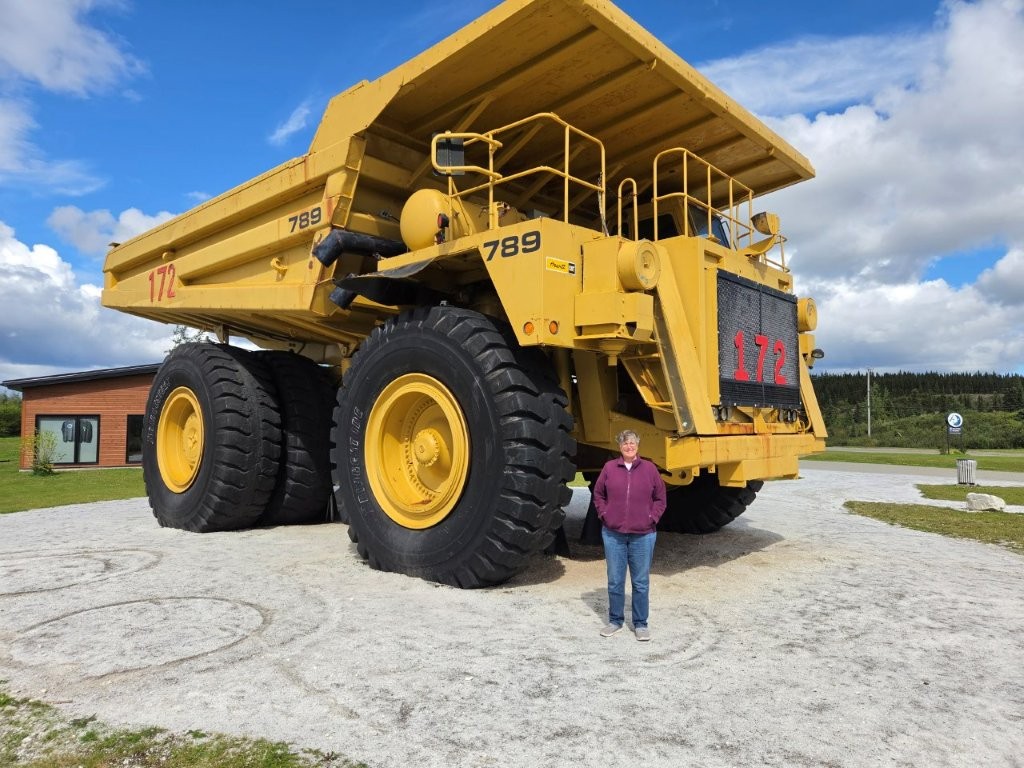
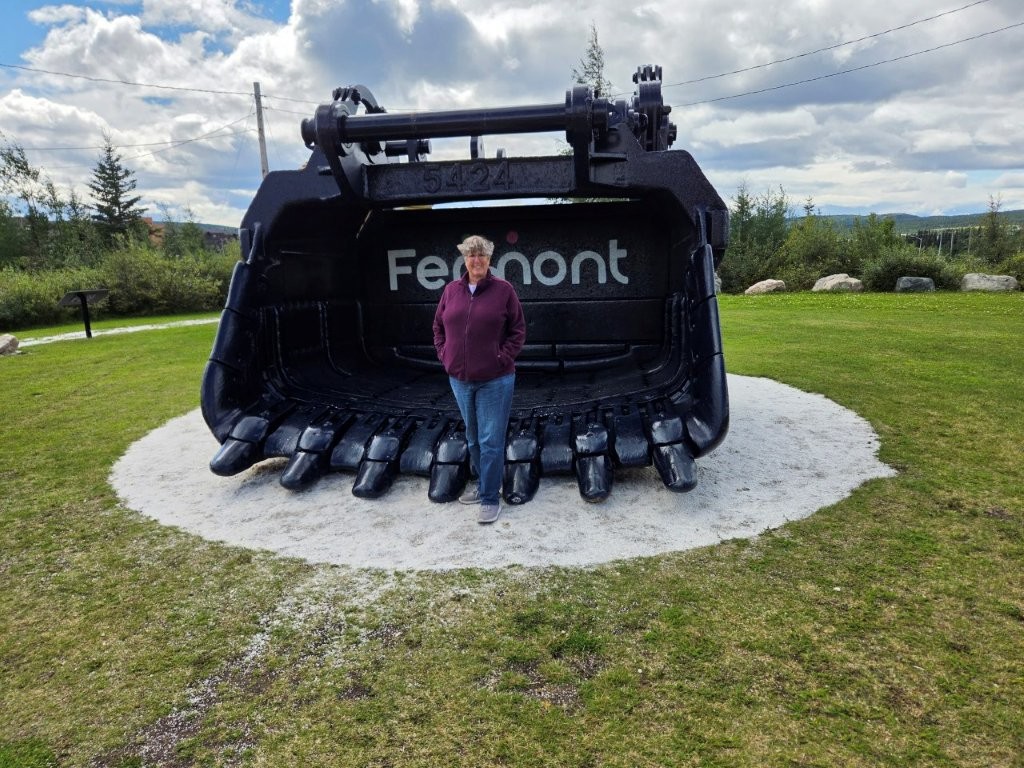
This is The Wall. The Wall is this long building (1.3 km) designed to be a windscreen to the rest of the town. It permits residents (other than mine workers) to never leave the building during the long winter, which usually lasts about seven months. The building was inspired by similar projects in Sweden. This is NOT my picture…there is no way I could get a picture of the building without a drone!As I stated, we didn’t get to take a mine tour, but we got to check out some mining equipment at the local information center. This is your childhood Tonka Truck!You can fit more than a bit of iron ore in this bucket!
We really enjoyed our drive across Labrador and experiencing Expedition 51°. It’s something not many have done and in summer, it’s a pretty easy drive. At this point, it was time to head south into Quebec and we were about to find out the drive through Quebec would not be as easy.
Wow — more nice pictures and info,!!!!! Glad that you are able to experience all these adventures. I haven’t seen Karen’s pictures yet — she’s trying to transfer them to her computer so I don’t have to scroll through her phone.
Alan is actually a big fan of scallops, so he was intrigued by the idea of touring a scallop farm. But the raw ones, we would probably try them but give us a cooked one and we’d be happy!
Looks like another successful portion of your trip! Lots of cool things to see and do! Absolutely loved the Penney’s Pitstop car inside. What a treasure!
Wow — more nice pictures and info,!!!!! Glad that you are able to experience all these adventures. I haven’t seen Karen’s pictures yet — she’s trying to transfer them to her computer so I don’t have to scroll through her phone.
P.S. — I would have done a hard pass on the scallops — cooked other wise.
Alan is actually a big fan of scallops, so he was intrigued by the idea of touring a scallop farm. But the raw ones, we would probably try them but give us a cooked one and we’d be happy!
Looks like another successful portion of your trip! Lots of cool things to see and do! Absolutely loved the Penney’s Pitstop car inside. What a treasure!
Yeah…I won’t be eating raw scallops again any time soon.